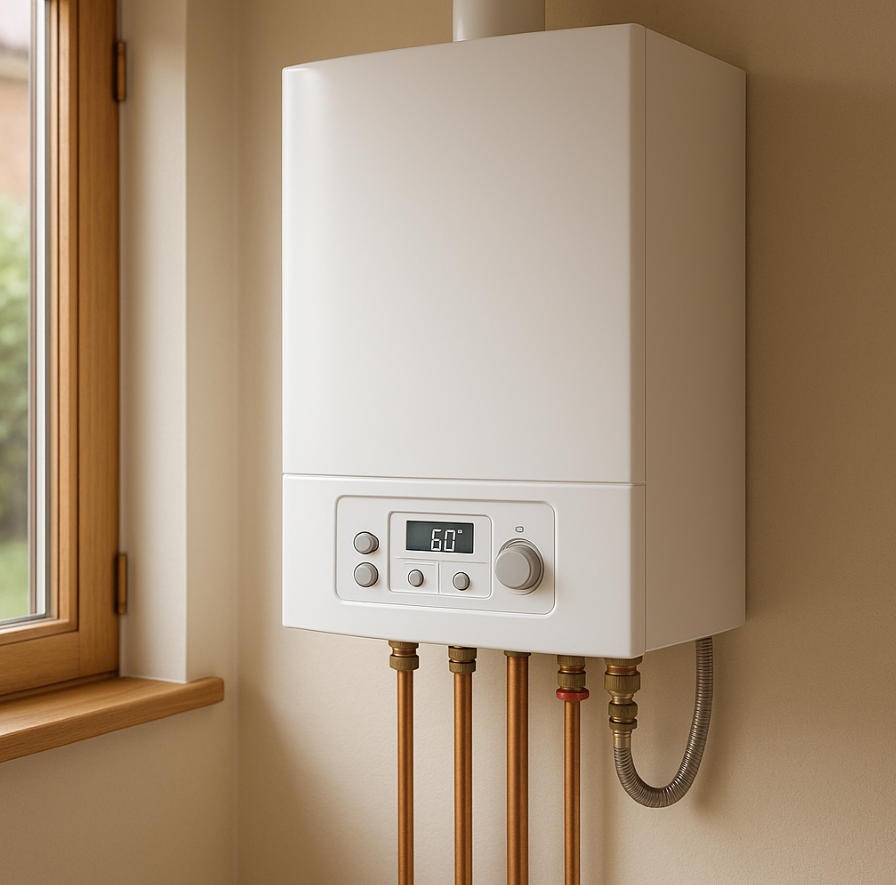
When shopping for a new heating system, homeowners often ask: Combi or Condensing boiler? The simple answer is that you can have both! This is because “Condensing” refers to the boiler’s mandatory, high-efficiency technology, while “Combi” refers to the type of boiler that provides instant hot water. In reality, the most efficient and popular new choice is a condensing combi boiler. We explain the crucial difference between these two terms and help you decide if a Combi boiler—or a System or Regular boiler—is the right fit for your home’s hot water needs.
Efficiency is a key factor in choosing the right boiler for your home, and understanding the differences between a combi and a condensing boiler can greatly impact your energy consumption and heating costs. You need to consider how each type fits your specific heating and hot water needs, as well as the available space in your home. In this post, you’ll learn the benefits and drawbacks of each boiler type, helping you make an informed decision that aligns with your lifestyle and budget.
Understanding Combi Boilers
Definition and Functionality
A combi boiler, short for combination boiler, merges both heating and hot water functions into a single unit. It heats water on demand, meaning there’s no need for a separate hot water tank. This design is particularly beneficial for homes with limited space, providing instant hot water directly from the mains as needed without delay.
Advantages of Combi Boilers
Combi boilers offer several advantages, most notably energy efficiency and space-saving design. They eliminate the need for bulky hot water storage tanks, which saves valuable room in your home. Additionally, their on-demand heating reduces energy waste, leading to potential savings on your energy bills.
With a combi boiler, you benefit from convenience; hot water is available instantly without waiting for a tank to refill or heat up. For instance, if you run multiple showers or taps simultaneously, a high-capacity combi can handle the demand effectively. Their compact size also allows for straightforward installation in smaller properties, making them ideal for urban dwellings or apartments, where space is a premium. Many modern combi models are designed with advanced technology to enhance energy efficiency even further, making them a smart long-term investment for your heating needs.
Understanding Condensing Boilers
Definition and Functionality
A condensing boiler operates by utilizing the heat from exhaust gases that would typically be expelled into the atmosphere. This design enables the boiler to capture and reuse this heat, significantly improving its efficiency. By condensing water vapor back into liquid, these boilers can extract up to 90% of the potential heat from the fuel, making them an energy-efficient choice for heating your home.
Advantages of Condensing Boilers
One of the primary advantages of condensing boilers is their high energy efficiency, which can lead to reduced energy bills. They typically achieve efficiency ratings of over 90%, allowing you to maximize energy use and minimize waste. Additionally, condensing boilers generally produce lower carbon emissions, contributing positively to environmental sustainability.
Moreover, you may find that many modern condensing boilers qualify for government incentives or rebates due to their eco-friendly design. They also operate quietly and can be compact, fitting well in smaller spaces, which is particularly beneficial for urban homes. The longevity of these systems, often lasting 15 years or more with proper maintenance, adds to their appeal, as you may save significantly on repairs and replacements over time.
Key Differences Between Combi and Condensing Boilers
Combi and condensing boilers each offer unique benefits that cater to different needs. A combi boiler provides on-demand hot water and heating in a single unit, making it ideal for smaller spaces. In contrast, condensing boilers are designed to maximize efficiency by reusing exhaust gases, often leading to lower energy bills and reduced carbon footprints. Understanding these differences will help you determine which option best suits your home and lifestyle.
Efficiency and Energy Use
Combi boilers are generally efficient, but condensing boilers excel when it comes to energy use, often achieving efficiencies of over 90%. They recycle heat from flue gases, meaning less energy is wasted. This can lead to significant savings on your heating bills, especially during colder months, making condensing boilers a smart choice for eco-conscious homeowners.
Installation and Space Requirements
When considering installation and space requirements, combi boilers typically require less room, as they do not need separate hot water tanks. You can install them in compact areas, such as kitchens or utility rooms. Condensing boilers, however, may occupy more space due to their design and necessity for a clear flue system. Depending on your home’s layout, this could impact your decision.
Installation involves more than just space; you must also think about the existing infrastructure. Combi boilers are often simpler to install, requiring fewer pipes and connections, which can reduce installation costs and time. Conversely, condensing boilers may need extensive adjustments to the flue system and potentially larger space for components. Consequently, understanding your current setup can greatly influence your choice, ensuring optimal performance with minimal disruption.
Cost Considerations
Initial Costs
The upfront expense of installing a combi boiler can range from £2,000 to £3,500, depending on the model and installation specifics. In contrast, a condensing boiler typically costs between £3,000 and £5,000 due to its more complex installation requirements and efficiency features. Factors such as your home’s size and existing plumbing can influence these figures, so assessing your situation is necessary for making an informed decision.
Long-term Savings
Regarding long-term savings, condensing boilers tend to have a higher efficiency rating, often exceeding 90%, which translates to lower energy bills. This can result in annual savings of £200 to £300 compared to traditional boilers. Over a decade, these savings can accumulate significantly, often offsetting the higher initial price of a condensing unit.
In addition to lower energy bills, consider the maintenance aspects. Condensing boilers are designed to be energy-efficient and require less frequent servicing, which can save you further on maintenance costs. Many users report reduced gas consumption due to the ability of condensing boilers to recover heat from exhaust gases. By tracking your usage, you may find that the improved efficiency and lower operational costs make the investment worthwhile in the long run.
Suitability for Different Homes
When choosing between a combi boiler and a condensing boiler, consider your home’s size and layout. Combi boilers work well in smaller spaces where a compact design is imperative, providing both heating and hot water from one unit. In contrast, condensing boilers suit larger homes with higher heating demands, offering the benefit of modular systems that can be expanded with multiple units without sacrificing efficiency.
Small vs. Large Households
If you live in a small household, a combi boiler could be your best option due to its space-saving design and efficiency in meeting moderate hot water needs. Conversely, large households with multiple bathrooms and high simultaneous hot water usage often require the greater capacity and flexibility of a condensing boiler, ensuring that everyone has access to hot water without delays.
Hot Water Demand Analysis
Your hot water demand is a critical factor in determining the right boiler type. For homes with a consistent need for hot water, such as multiple bathrooms in use at once, a condensing boiler is often necessary to provide sufficient flow rates. In contrast, if your hot water usage is sporadic, a combi boiler may efficiently meet your needs while saving space and costs.
To assess your hot water demand, consider the number of occupants and the frequency of hot water use in your home. For example, a household with two bathrooms may require up to 25-30 liters per minute for adequate performance, which a combi boiler might struggle to deliver during peak times. In this scenario, a condensing boiler can ensure a steady supply, efficiently meeting demand. Additionally, reviewing usage patterns, such as shower times and appliance schedules, can provide valuable insights into the specific needs of your household.
Consumer Preferences and Trends
Consumer preferences are shifting towards energy-efficient solutions, with many homeowners favoring combi boilers for their compact design and instant hot water supply. Current trends indicate a growing preference for systems that integrate smart technology, allowing for remote control and optimization of energy consumption, which leads to cost savings and environmental benefits.
Market Research Insights
Recent surveys reveal that 65% of homeowners prioritize energy efficiency when selecting a boiler, with combi boilers receiving high satisfaction ratings for their space-saving features and reliability. Notably, the condensing boiler market is gaining traction, appealing to those focused on long-term energy savings and reduced carbon footprints.
Customer Feedback and Performance
Feedback highlights that users appreciate the on-demand hot water of combi boilers, which eliminates the need for bulky storage tanks. However, some customers indicate performance issues in larger households during peak demand times, prompting consideration of condensing boilers for better handling of simultaneous heating and hot water requirements.
In analyzing customer reviews, many homeowners report satisfaction with the energy savings they experience after switching to condensing boilers. They highlight improved efficiency, particularly in modernized homes where heating demands are higher. Users often share anecdotes where annual energy bills decreased significantly, reinforcing this technology’s value in reducing overall heating costs without sacrificing performance. As such, both types of boilers have their advocates, underscoring the importance of individual needs when making a choice.
Summing up
From above, it’s clear that choosing between a combi and a condensing boiler depends on your specific heating and hot water needs. If you prioritize space and instant hot water, a combi boiler may suit your lifestyle better. However, if you need a more efficient system that can handle higher demands, particularly for larger households, a condensing boiler offers superior fuel efficiency and performance.
The choice isn’t between Combi or Condensing boiler, but rather selecting a system type (Combi, System, or Regular) that is a modern, high-efficiency Condensing model. If you have limited space and low-to-moderate hot water demand, a Combi is the perfect choice for on-demand heating. However, if you have multiple bathrooms or a large family, a System or Regular boiler with a hot water cylinder might deliver better performance. Always consult a certified Gas Safe or local equivalent engineer to properly size the boiler for your specific property and energy requirements.
Evaluate your home’s hot water usage and heating requirements to determine the best option for you.