Categories
Uncategorized

7 Genius Storage Solutions for Small Bathrooms


7 Genius Storage Solutions for Small Bathrooms (No Major Renovation Required)

Maximize every inch! Explore clever and stylish Storage Solutions for Small Bathrooms, including floating shelves, vertical cabinets, and over-the-toilet space savers.

Small bathrooms are notorious for clutter, leaving homeowners searching for creative ways to fit essentials like towels, toiletries, and cleaning supplies into minimal square footage. If you’re tired of tripping over products, you need smart Storage Solutions for Small Bathrooms that utilize underappreciated vertical and recessed spaces. Fortunately, modern design offers dozens of budget-friendly and stylish fixes that can completely transform your tiny water closet into a highly organized and serene sanctuary. We guide you through the best methods to declutter and maximize every forgotten corner, from the wall above the toilet to the inside of your cabinet doors.

To maximize storage in your small bathroom without major renovations, start by utilizing vertical space with shelves. Invest in over-the-door organizers for easy access to essentials. Opt for multi-functional furniture that serves more than one purpose. Create hidden storage using decorative baskets to keep items out of sight. Use magnetic strips for small tools and hang hooks for towels. Finally, incorporate a rolling cart for flexible storage solutions. Keep exploring to discover even more smart ideas!

Utilize Vertical Space With Shelving

When you’re short on floor space, utilizing vertical storage can transform your small bathroom into a more organized and functional area.

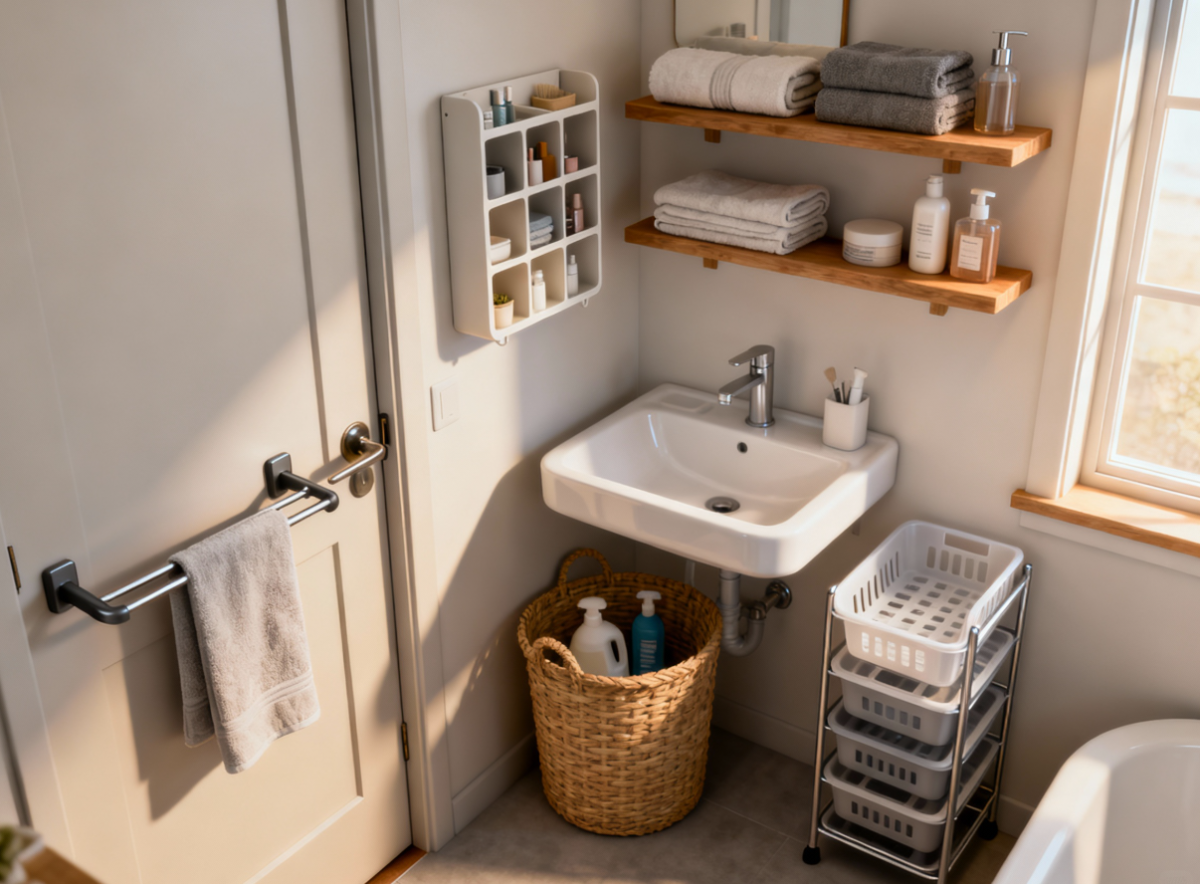
Installing shelves above the toilet or next to the sink maximizes your wall space and keeps essentials within easy reach. Use decorative baskets or bins on these shelves to store toiletries and towels, creating a neat, cohesive look.

You can also consider floating shelves; they offer a modern touch while providing extra storage without occupying floor space.

Don’t forget to arrange items by frequency of use—store daily essentials at eye level and seasonal items higher up.

Invest in Over-the-Door Organizers

Maximizing storage in a small bathroom often means thinking outside the box, or in this case, the door. Over-the-door organizers are a fantastic solution for utilizing unused space.

You can hang them on your bathroom door to store toiletries, cleaning supplies, or even towels. This keeps your essentials within reach while freeing up counter space.

Look for organizers with pockets or shelves to fit your needs. They’re easy to install and come in various styles, so you can find one that matches your decor.

Investing in these organizers can greatly enhance your bathroom’s functionality and organization without costly renovations.

Opt for Multi-Functional Furniture

In small bathrooms, choosing multi-functional furniture can make a significant difference in both storage and style.

Look for pieces that serve dual purposes, like a vanity with built-in storage or a bench that doubles as a laundry hamper. Wall-mounted shelves can provide display space while keeping essentials within reach.

Consider a stool that can be tucked away when not in use—perfect for extra seating or a stepping stool. Opting for modular furniture lets you adapt your space as needed.

With smart choices, you’ll maximize functionality without sacrificing aesthetics, creating an inviting, organized bathroom that meets all your needs.

Create Hidden Storage With Baskets

Baskets can transform your small bathroom into a clutter-free oasis, offering stylish and practical hidden storage solutions. You can place them under the sink, on shelves, or even hang them on hooks to maximize space.

Use decorative baskets to store toiletries, towels, or cleaning supplies, keeping them organized yet out of sight. Consider varying sizes and materials to add texture and interest. Label each basket for easy access, making it simple to find what you need.

With a little creativity, you’ll create a neat and inviting atmosphere, turning your small bathroom into a functional and beautiful space.

Use Magnetic Strips for Small Items

Sometimes, small items in a bathroom can easily get lost or clutter your counter space. A simple solution is to use magnetic strips.

Attach a strip to the wall or inside a cabinet door, and you’ll create instant storage for metal items like tweezers, scissors, or bobby pins. This keeps them visible and accessible while freeing up your surfaces.

You can even paint the strip to match your decor for a seamless look. By using magnetic strips, you’ll maximize your storage without any major renovations, making your small bathroom feel more organized and functional.

Give it a try!

Hang Hooks for Towels and Accessories

Adding hooks for towels and accessories can drastically improve the functionality of your small bathroom. By installing a few hooks on the back of the door or walls, you’ll free up valuable space and keep your towels within easy reach.

Choose decorative hooks that match your bathroom’s style for an added aesthetic touch. You can also hang accessories like robes or loofahs, keeping everything organized and off the floor.

Consider using adhesive hooks for a no-drill solution, perfect for renters. With this simple addition, you’ll create a more efficient and pleasant bathroom experience without the need for major renovations.

Incorporate a Rolling Cart for Flexibility

Consider rolling in a versatile cart to maximize storage in your small bathroom. A rolling cart offers flexibility, allowing you to easily move essentials wherever you need them.

Use it to store extra towels, toiletries, or cleaning supplies, keeping everything organized and within reach. When you need more space, simply roll it into a corner or behind the door.

Choose a cart with multiple shelves or baskets for even better organization. Plus, with various styles available, you can find one that complements your decor.

Embrace this smart solution to enhance functionality without any major renovations!

Frequently Asked Questions

How Can I Maximize Storage Without Sacrificing Style?

You can maximize storage without sacrificing style by using multifunctional furniture, incorporating stylish baskets, and installing floating shelves.

Keep colors and materials cohesive, ensuring everything blends seamlessly while still providing practical storage solutions for your space.

What Are the Best Materials for Bathroom Shelving?

The best materials for bathroom shelving are water-resistant options like bamboo, metal, or treated wood.

These materials combine durability with style, ensuring your shelves can handle humidity while looking great in your space.

How Do I Choose the Right Over-The-Door Organizer?

To choose the right over-the-door organizer, consider your storage needs, door height, and the organizer’s weight capacity.

Make sure it fits your style and complements your bathroom decor for a cohesive look.

Can I Paint or Customize Storage Solutions?

Yes, you can definitely paint or customize storage solutions!

Choose colors or patterns that match your style, and use removable adhesive or paint designed for plastics.

This way, you’ll refresh your space without permanent changes.

What Are Some Budget-Friendly Storage Options?

You can use floating shelves, over-the-toilet organizers, and storage bins for budget-friendly options.

Repurpose old furniture or use baskets to maximize space.

Consider tiered carts for easy access to essentials without breaking the bank.

Conclusion

With these seven clever storage solutions, you can transform your small bathroom into an organized oasis without any major renovations. By utilizing vertical space, investing in smart organizers, and incorporating multi-functional furniture, you’ll maximize every inch. Don’t forget to use hidden storage options and clever accessories like magnetic strips and hooks. A rolling cart adds flexibility for your essentials. Get started today, and enjoy a clutter-free bathroom that feels spacious and inviting!
Categories
Uncategorized

Remodeling vs. Renovation: Understanding the Difference Before You Hire a Contractor

Imagine stepping into a newly transformed space, where every corner reflects your vision. Before you can achieve that, it’s essential to understand the difference between remodeling vs. renovation. Each approach serves a distinct purpose and can greatly impact your project’s outcome. As you consider hiring a contractor, knowing which option aligns with your goals can save you time and money. So, how do you determine the right path for your home?

Defining Remodeling and Renovation

When you think about home improvements, it’s easy to confuse remodeling with renovation, but they actually signify different processes.

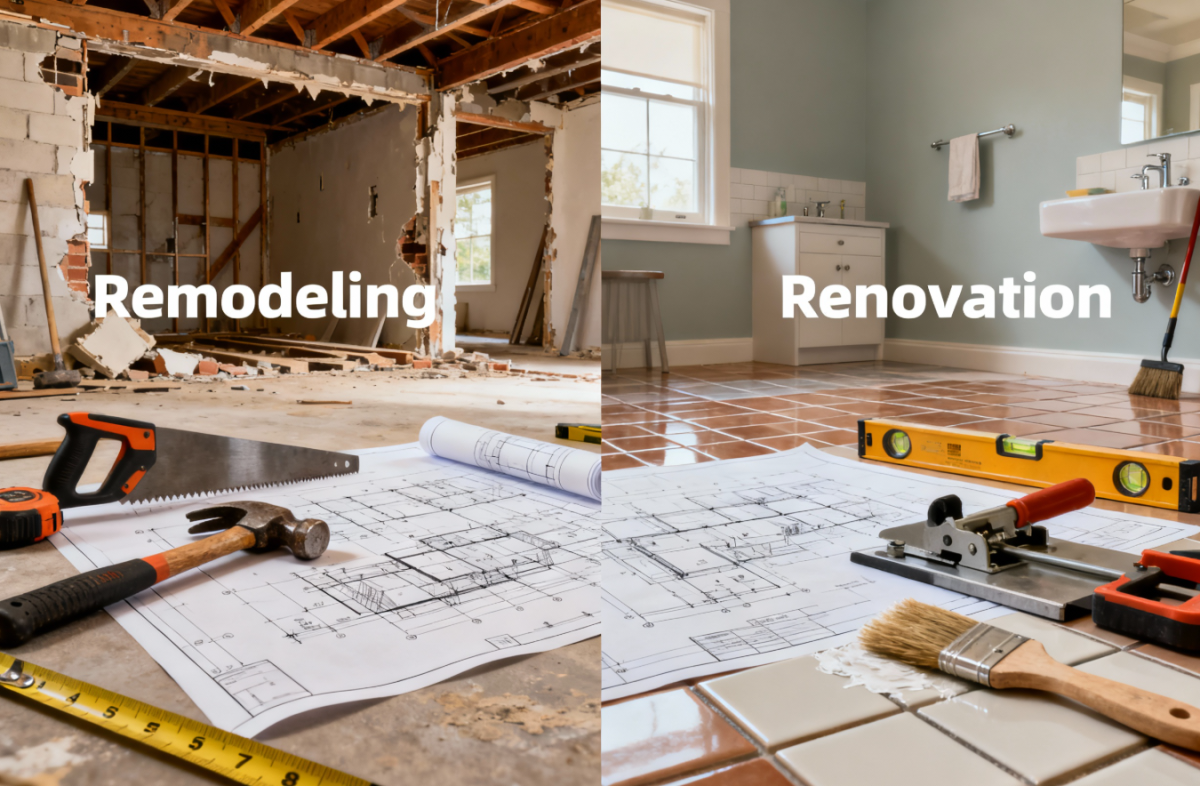
Remodeling involves changing the structure or layout of a space, which can dramatically transform your home. You might embrace popular remodeling trends, like open-concept living spaces or modern kitchen islands, to create a more inviting atmosphere.

On the other hand, renovation focuses on restoring or updating existing features without altering the layout, often reflecting various renovation styles, such as historic preservation or modern upgrades.

By understanding these distinctions, you can better express your vision to contractors, ensuring your home embodies the warmth and comfort you desire.

Ultimately, knowing the difference helps you create a space that truly feels like home.

Key Differences Between Remodeling and Renovation

Understanding the key differences between remodeling and renovation can save you time and money on your home improvement projects.

Remodeling typically involves changing the structure or layout of a space to meet your design intentions, like converting a basement into a functional living area. This can greatly alter project outcomes, enhancing both aesthetics and functionality.

On the other hand, renovation focuses on restoring or improving existing features without altering the overall structure, such as updating a kitchen with new cabinets and countertops.

Knowing these distinctions helps you clarify your goals, ensuring you hire the right contractor for the job.

Whether you’re looking to reimagine a space or simply refresh it, understanding these differences is crucial for achieving your vision.

When to Choose Remodeling

Have you ever felt that your home doesn’t quite fit your lifestyle? If so, it might be time to contemplate remodeling.

This approach allows you to make creative design choices that reflect your personality and meet your needs. Whether you want to create an open-concept living space or add a functional home office, remodeling can transform your environment into a place where you feel truly at home.

It’s perfect for those seeking functional upgrades that enhance both comfort and efficiency. By reimagining your space, you can improve how you live and entertain.

When to Choose Renovation

While many homeowners seek to personalize their spaces through remodeling, renovation offers a different approach that can be equally rewarding.

If you’re looking to improve your home’s functionalityenhance its value, or simply bring it up to date without altering its core structure, renovation is the way to go.

There are various renovation types, from kitchen upgrades to bathroom enhancements, each providing specific benefits.

For instance, modernizing your kitchen can boost energy efficiency and create a more inviting atmosphere for family gatherings.

By choosing renovation, you’re not just improving your space; you’re investing in your home’s future.

Cost Considerations for Remodeling vs. Renovation

When weighing the financial aspects of remodeling versus renovation, it’s essential to contemplate both the immediate costs and long-term value. Start with a thorough budget analysis to determine what you can afford.

Remodeling typically involves a higher cost breakdown due to structural changes, while renovation often focuses on cosmetic improvements, making it more budget-friendly.

Consider hidden expenses for both options, such as permits or unexpected repairs. Prioritize your needs and desires to guarantee you’re making a wise investment.

Impact on Home Value

The impact on home value is an essential factor to evaluate when deciding between remodeling and renovation.

Remodeling often enhances aesthetic appeal and functionality, which can lead to a favorable home appraisal. Upgraded kitchens or bathrooms typically attract buyers, reflecting positively on your investment.

On the other hand, renovation focuses on restoring or maintaining a property’s original features, which may not greatly boost value but can preserve it in line with market trends.

Understanding these trends is important; a well-planned remodel might yield a higher return, while thoughtful renovations can help maintain your home’s character.

Ultimately, aligning your choice with current market trends will help guarantee you maximize your home’s value, creating a space that’s both inviting and financially sound.

The Role of a Contractor in Your Project

When you’re ready to start your remodeling or renovation project, finding the right contractor can make all the difference.

Effective communication and collaboration with them will guarantee your vision comes to life while managing timelines keeps everything on track.

Let’s explore how choosing a skilled contractor can enhance your project experience.

Finding the Right Contractor

How do you choose the right contractor for your remodeling or renovation project? Start by evaluating contractor qualifications.

Look for licensed and insured professionals who’ve experience in projects similar to yours. Check their references and read reviews to gauge their reputation.

It’s essential to discuss project timelines upfront; a reliable contractor should provide a clear schedule and stick to it. Ask about their approach to managing any unforeseen issues that may arise.

Don’t hesitate to interview multiple contractors to compare their expertise and communication styles. Finding a contractor who aligns with your vision and values can make all the difference.

You deserve someone who understands your needs and can bring your project to life efficiently and effectively.

Communication and Collaboration

Effective communication and collaboration are essential to the success of your remodeling or renovation project, as they directly influence how smoothly everything runs.

When you and your contractor engage using effective collaboration techniques, you’ll create a teamwork atmosphere that fosters trust and shared goals. Discuss your vision openly, and don’t hesitate to express your concerns.

Different communication styles can impact your project, so find a rhythm that works for both of you. Whether it’s regular check-ins or detailed progress updates, maintaining this dialogue helps you stay on the same page.

Managing Project Timelines

While maneuvering the complexities of a remodeling or renovation project, managing timelines becomes essential, and your contractor plays a pivotal role in this process. They’re your go-to person for effective timeline management, guaranteeing that every phase of your project aligns with your expectations.

By establishing clear project scheduling, your contractor can anticipate potential delays and proactively address them, keeping your project on track. Regular updates and open communication help you stay informed and involved, fostering a sense of belonging in the process.

With an experienced contractor guiding you, you can navigate timelines confidently, making your vision a reality while minimizing stress. Remember, a well-managed timeline not only enhances efficiency but also guarantees a smoother, more enjoyable renovation experience.

Planning Your Project Scope

As you commence on your remodeling or renovation journey, defining your project scope is essential for a successful outcome. Start by outlining your project objectives—what do you want to achieve? Whether it’s creating a more functional space or enhancing aesthetics, clarity here will guide your decisions.

Next, factor in your budget constraints. Knowing how much you can invest helps prioritize features and materials while avoiding costly surprises.

Collaborate with your contractor to guarantee your vision aligns with practical possibilities. This collaboration fosters a sense of belonging, as you’re both working towards a common goal.

Common Misconceptions

Many people confuse remodeling and renovation, assuming they’re interchangeable terms. This misunderstanding leads to myths debunked, making it essential for you to grasp the terminology clarity.

Remodeling involves altering the structure or function of a space, like changing a kitchen layout or adding a room. In contrast, renovation focuses on restoring or improving an existing structure without changing its purpose, such as repainting or replacing fixtures.

By recognizing these distinctions, you’ll not only communicate better with contractors but also make more informed decisions for your project. Understanding the difference fosters confidence and guarantees you’re on the same page, creating a sense of belonging in your home transformation journey.

Don’t let misconceptions hold you back!

Tips for Effective Communication With Your Contractor

Effective communication with your contractor is essential for a successful project.

Start by clearly defining your expectations, using visual aids to illustrate your vision, and establishing regular check-ins to keep everything on track.

This approach not only minimizes misunderstandings but also fosters a collaborative environment.

Clearly Define Expectations

How can you guarantee your vision for the remodeling or renovation project aligns with your contractor’s understanding? Start by clearly defining your expectations.

Outline your project goals, detailing what you envision for the space. Share any specific design elements or functionalities you want to include. This clarity helps foster expectation alignment between you and your contractor, ensuring everyone’s on the same page.

Regularly check in with your contractor to discuss progress and address any concerns. This open line of communication creates a sense of belonging, making you feel more involved in the process.

Use Visual Aids

What’s the best way to guarantee your contractor truly understands your vision? Using visual aids is key. A visual representation of your ideas can bridge any communication gaps.

Consider creating mood boardssketches, or even digital designs to clarify your expectations. Infographic examples can help convey complex concepts in a simple, digestible format, making it easier for your contractor to grasp your style and preferences.

Don’t underestimate the power of visuals; they foster a shared understanding and can prevent misunderstandings down the line. When you present your ideas visually, you invite your contractor into your creative process, fostering a sense of collaboration and belonging that’s essential for a successful project.

Establish Regular Check-ins

To guarantee your project stays on track and meets your expectations, establishing regular check-ins with your contractor is crucial. Schedule consistent meetings—whether weekly or bi-weekly—to discuss project updates and address any concerns.

This not only fosters open communication but also builds trust, making you feel more connected to the process. During these check-ins, ask about contractor availability to confirm they’re aligned with your timeline and any upcoming deadlines.

Make certain you’re clear about your goals and any changes you wish to implement. By actively participating in these discussions, you’ll feel more engaged and informed, helping create a collaborative environment that contributes to the success of your remodeling or renovation project.

Real-Life Examples of Remodeling and Renovation Projects

Many homeowners find themselves contemplating the difference between remodeling and renovation when starting on a home improvement project.

For instance, a kitchen expansion that opens up space and creates a more functional layout is a perfect example of remodeling. You’re not just updating; you’re reimagining the entire area to fit your lifestyle better.

On the other hand, a bathroom upgrade, where you replace fixtures and update tiles without changing the layout, falls under renovation. It’s about revitalizing what you already have.

Understanding these distinctions helps you make informed decisions, ensuring your project aligns with your vision and needs.

Whether you’re expanding or upgrading, knowing the difference can lead to a successful home transformation.