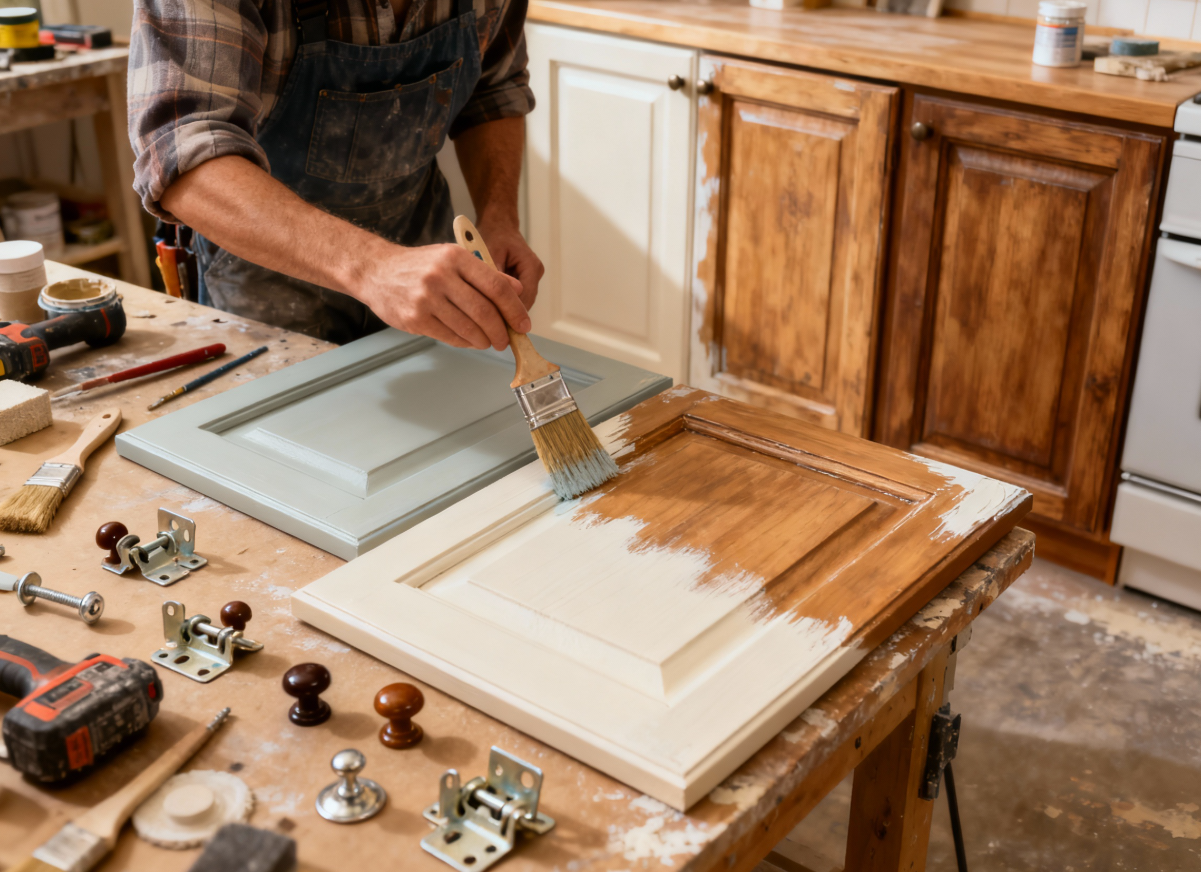
A DIY kitchen reface can be worth it if you’re looking to save money and want creative control over the design. It’s quicker and less expensive than a full remodel, letting you refresh your space with new cabinet doors and finishes. However, consider the time and skill required for a professional finish, as well as any existing damage. If you’re unsure whether to reface or replace, there’s more to explore about your options.
Understanding Kitchen Refacing
When you consider giving your kitchen a fresh look, understanding kitchen refacing is essential. This process involves replacing the cabinet doors and drawer fronts while keeping the existing frames. It’s a great way to enhance kitchen aesthetics without a full remodel.
Start with a cost analysis to see if it fits your budget. Look into material selection carefully; the right materials can greatly impact durability and appearance.
Also, factor in the time investment—refacing can often be completed in days rather than weeks. Stay updated on design trends, as they can inspire your choices and make your kitchen feel modern.
The Benefits of a DIY Kitchen Reface
Choosing to DIY your kitchen reface not only saves money but also gives you complete control over the design process. You can explore budget friendly options that suit your financial needs while creating a space that reflects your personal style.
With design versatility, you’re free to mix and match colors and finishes that mightn’t be available in pre-made products. Plus, you can utilize time saving techniques to streamline your work, completing the project more efficiently.
By opting for eco friendly materials, you’ll contribute to a sustainable environment.
Finally, engaging in a DIY project offers skill development benefits, enhancing your handyman abilities and boosting your confidence for future home improvements. This journey is as rewarding as the finished kitchen!
The Drawbacks of Refinishing Cabinets
While refinishing cabinets can transform your kitchen, it’s important to contemplate the drawbacks that come with the process.
First, consider the cost considerations; materials, tools, and supplies can add up quickly. You’ll also face a significant time investment, as prepping, painting, and drying can take days or even weeks.
If you’re not confident in your skills, the skill level required for a professional-looking finish might deter you. Additionally, the durability of the finish can be a concern; if not done correctly, it may chip or wear off over time.
Finally, potential complications like dealing with existing damage or uneven surfaces can arise, turning your DIY project into a frustrating experience.
Weigh these factors before diving in.
When to Consider Cabinet Replacement
If your cabinets show signs of severe wear or damage, it might be time to contemplate a full replacement instead of a simple refresh.
Consider your current cabinet style and whether it still fits your kitchen layout; outdated designs can detract from your space.
Budget considerations are essential, as replacement can be more expensive upfront but may offer long-term value.
If your cabinets are made from low-quality materials that don’t hold up, exploring better material options could enhance both durability and aesthetics.
Additionally, if you’re planning a significant kitchen renovation, replacing cabinets can create a cohesive look that ties everything together.
Ultimately, weigh the costs against the benefits to determine if replacement is the right choice for you.
The Advantages of Replacing Cabinets
Replacing cabinets can greatly enhance your kitchen’s functionality and aesthetic appeal.
You’ll enjoy design flexibility, allowing you to tailor your space to your specific tastes and needs. With a variety of material options available, you can choose cabinets that fit both your style and budget.
While cost considerations are important, investing in quality cabinets can lead to significant long-term value. A professional installation process guarantees that your new cabinets are securely fitted, minimizing future maintenance issues.
This means you can focus on enjoying your revamped kitchen rather than worrying about repairs. Ultimately, replacing cabinets can transform your kitchen into a more efficient and beautiful space, making it a worthwhile investment for your home.
The Disadvantages of Full Cabinet Replacement
Though upgrading your kitchen with new cabinets can be enticing, full cabinet replacement comes with several drawbacks that shouldn’t be overlooked.
First, the cost implications can be significant; you may find yourself spending more than you initially planned.
Additionally, the time investment required for removal and installation can disrupt your daily routine for weeks.
There’s also the environmental impact to evaluate, as disposing of old cabinets contributes to landfill waste.
You might encounter design limitations, especially if the new cabinets don’t match your existing kitchen layout or style.
Finally, installation challenges can arise, from ensuring proper alignment to dealing with unexpected structural issues, making the entire process more complicated than you anticipated.
Making the Right Choice for Your Kitchen
When considering a kitchen update, choosing the right approach can greatly impact both functionality and aesthetics.
First, think about your kitchen style. Do you want a modern look, or are you drawn to something more traditional?
Next, evaluate budget considerations; refinishing is often less expensive than a full replacement.
Consider your project timeline as well; DIY options may take longer, but they can save you money.
Assess your skill level—are you comfortable tackling a DIY project, or would you prefer professional help?
Finally, explore material options. High-quality finishes can elevate your kitchen’s appeal without the need for new cabinets.
Weigh these factors carefully to guarantee you make the best decision for your space.
Frequently Asked Questions
How Long Does a DIY Kitchen Reface Typically Take?
A DIY kitchen reface typically takes one to two weekends, depending on your time management and skill assessment. Effective project planning and choosing your finish options can streamline the process, while design inspiration keeps you motivated.
What Tools Are Needed for a DIY Kitchen Reface?
For a DIY kitchen reface, you’ll need sanding tools, adhesive options, paint sprayers, safety equipment, and measuring devices. Gather these essentials to guarantee a smooth and efficient refinishing process for your cabinets.
Can I Reface Cabinets Without Professional Help?
Yes, you can reface cabinets without professional help. Use DIY techniques, explore different cabinet styles, apply refinishing tips, manage your time wisely, and consider cost factors to guarantee a successful project that transforms your kitchen beautifully.
What Materials Are Best for DIY Cabinet Refinishing?
For DIY cabinet refinishing, use high-quality paint types like latex or chalk, choose wood veneers for a fresh look, select suitable primer options, and explore various finish selections and strong adhesive choices to guarantee durability.
Is There a Cost Difference Between Refinishing and Repainting Cabinets?
A quality paint job can cost 30% less than refinishing cabinets, but consider long-term value. The cost comparison hinges on paint quality, labor costs, and material choices, impacting your kitchen’s overall appeal and durability.