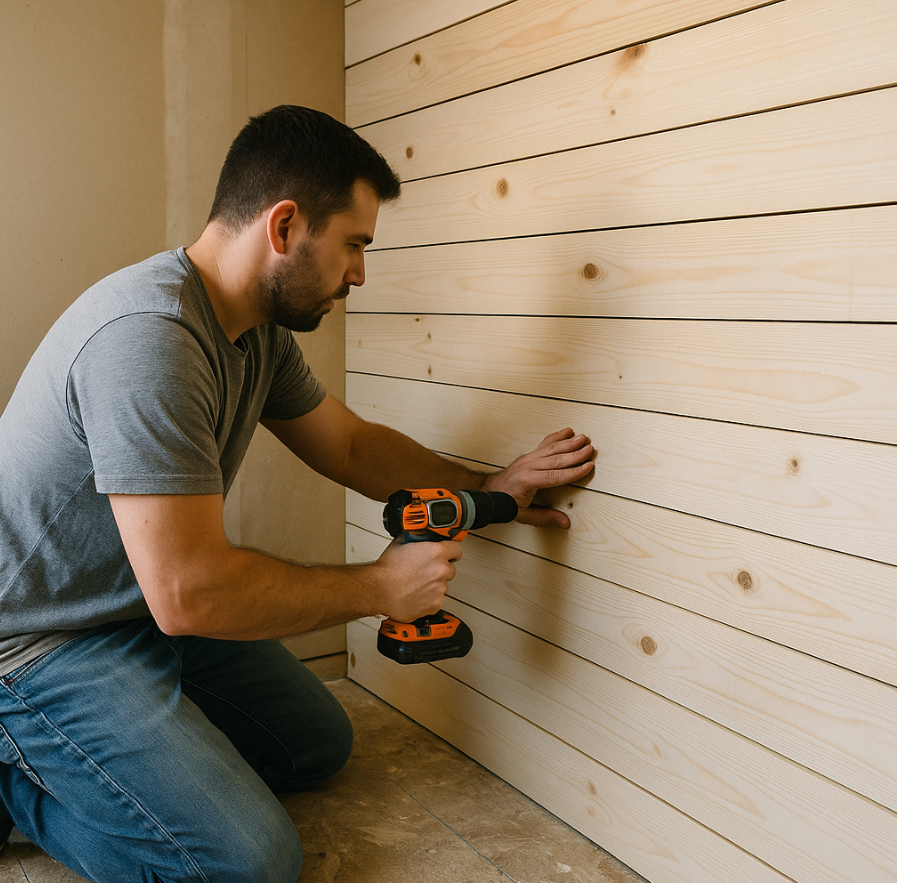
Installing a shiplap wall can transform your space with a unique touch. Start by gathering your materials and tools, and prep the wall by ensuring it’s clean and smooth. Measure and cut your shiplap boards accurately, then paint or stain them according to your design vision. Secure the boards in place, filling any gaps and nail holes for a clean finish. With some finishing touches, your shiplap wall will shine. Discover more detailed steps to perfect your project.
Tools and Materials Needed
Before you plunge into your shiplap wall project, it’s vital to gather the right tools and materials.
First, you’ll need shiplap materials, which can be wood planks or engineered options. Choose a finish that complements your style.
For important tools, grab a miter saw for precise cuts, a level to guarantee straight lines, and a nail gun for easy installation. A measuring tape is essential for accurate measurements, while a stud finder helps locate the best spots to nail your shiplap.
Don’t forget safety gear like goggles and gloves.
With these items in hand, you’ll be well-prepared to tackle your shiplap wall and achieve a stunning finish that transforms your space.
Happy building!
Preparing Your Wall
As you get ready to install your shiplap wall, it’s crucial to prepare the surface properly to guarantee a smooth and successful application.
Start with wall preparation by removing any existing décor, nails, or fixtures. Next, inspect the wall for any damage or imperfections; patch holes and sand rough areas to create a level surface.
Once the wall is prepped, focus on surface cleaning. Use a damp cloth to wipe away dust, dirt, or grease, ensuring nothing interferes with the adhesive or paint. If your wall has a glossy finish, consider lightly sanding it to promote better adhesion.
After these steps, your wall will be primed and ready for the shiplap installation, setting the stage for a beautiful transformation.
Measuring and Marking
Before you start installing your shiplap, you need to gather your measuring tools, like a tape measure and level.
Next, determine the dimensions of your wall to guarantee you have enough material.
Finally, mark level lines where your shiplap will go to keep everything straight and looking great.
Gather Necessary Tools
To successfully install a shiplap wall, you’ll need to gather a few essential measuring and marking tools.
Start with a tape measure to accurately gauge your wall dimensions and the length of your shiplap boards. A level is vital to guarantee your lines are straight, while a square helps you create clean, right angles.
Don’t forget a pencil for marking measurements on the wall and the boards. If you’re exploring different shiplap styles for your project, consider having a chalk line handy for clear, visible guidelines.
This way, you’ll have a solid foundation for your design inspiration. With the right tools in hand, you’ll set yourself up for a successful installation process.
Determine Wall Dimensions
Accurately measuring your wall dimensions is essential for a successful shiplap installation. Start by determining the total wall space you want to cover.
Use a tape measure to find the height and width of the area, noting any obstacles like windows or outlets that might affect your design considerations. It’s important to measure at multiple points to guarantee accuracy, as walls can sometimes be uneven.
Record your measurements clearly, as this will guide your material purchases and installation process. By understanding your wall dimensions, you can better visualize how the shiplap will fit into your space and make adjustments to your design if necessary.
Taking these steps now will save you time and effort later on.
Mark Level Lines
Once you’ve measured your wall dimensions, the next step is to mark level lines to guide your shiplap installation.
Start by using a level tool, like a laser level or a traditional spirit level, to guarantee accuracy. Choose a starting point, typically the floor or a reference line, and mark it.
Then, hold your level tool vertically and draw a straight line across the wall. This line will help with wall alignment as you install each shiplap board.
Continue marking lines at the height you want each row of shiplap to sit. Don’t rush; double-check your lines for accuracy.
Properly marked level lines will make your installation smoother and result in a professional-looking finish.
Cutting the Shiplap Boards
As you prepare to cut your shiplap boards, it’s essential to measure carefully to guarantee a perfect fit. Start by determining the board measurements based on your wall dimensions. Use a tape measure to get accurate lengths, and don’t forget to account for any outlets or obstacles.
When it comes to cutting techniques, a miter saw or circular saw will provide clean, straight cuts. Mark your measurements on the boards clearly, and use a square to make sure your lines are straight.
Always remember to wear safety goggles and follow proper safety protocols during cutting. After cutting, double-check your pieces against the wall before installation to make sure everything aligns perfectly.
Happy cutting!
Painting or Staining the Shiplap
Now that your shiplap boards are cut and ready, it’s time to think about how you want to finish them.
Choosing the right paint or stain can enhance the beauty of your wood, while proper prep and application techniques will guarantee a smooth and lasting result.
Let’s explore how to get your shiplap looking its best!
Choosing the Right Finish
When you’re ready to enhance your shiplap wall, deciding between paint and stain can be pivotal. Each option offers distinct benefits that align with various shiplap styles.
Paint provides a solid, uniform color and is great for achieving a bold look. It also offers a wider range of colors and finishes.
On the other hand, stain preserves the wood’s natural texture and grain, providing a more rustic appearance that enhances the shiplap’s character.
Consider your overall design vision and how each finish option complements your space. If you prefer a contemporary feel, paint might be your best bet. If you’re aiming for a cozy, farmhouse look, staining could be the way to go.
Choose wisely!
Prepping the Shiplap Surface
Properly prepping your shiplap surface is essential for achieving a smooth and long-lasting finish, whether you choose to paint or stain.
Start by selecting the right shiplap material types, such as pine, plywood, or MDF, as each requires different preparation techniques. Clear any dirt or dust from the surface using a damp cloth, and allow it to dry thoroughly.
If your shiplap is raw wood, lightly sand any rough spots to guarantee an even texture. For painted finishes, consider applying a primer to enhance adhesion and color vibrancy.
If you’re staining, use a wood conditioner to promote an even finish. Following these surface preparation techniques will set you up for success with your chosen finish.
Application Techniques Explained
Applying paint or stain to your shiplap can transform the look of your space, and getting the technique right is essential for a professional finish.
Start by choosing your desired shiplap styles; whether you go with a classic white, bold color, or natural wood stain, each requires different application techniques. If painting, use a high-quality brush or roller for an even coat, ensuring you cover any gaps.
For staining, apply with a clean cloth or brush, wiping off excess for a smooth finish. Always work in sections, and allow adequate drying time between coats.
Finally, seal your shiplap with a protective topcoat to enhance durability and maintain that fresh look for years to come.
Installing the First Board
Starting your shiplap wall installation with the first board sets the tone for the entire project, so it’s crucial to get it right.
Begin by determining your desired starting height; a good rule is about one inch above the baseboard. Verify the first board placement is level by using a level tool. If your wall isn’t perfectly straight, you may need to trim the board’s edge to fit.
Once you’ve found the right spot, mark where the top of the board will go to maintain board alignment. This will serve as your guide for the rest of the installation.
Take your time here; a well-placed first board will make the subsequent boards easier to install and align correctly.
Securing the Remaining Boards
Once you’ve secured the first board, it’s time to fasten the remaining boards to create a seamless look.
Begin by ensuring proper board alignment; this is essential for a professional finish. Place the next board against the first, checking that it’s level. Use a stud finder to locate the wall studs, as they’ll provide the best support.
You can choose different securing methods, like using finishing nails or adhesive, depending on your preference. If you’re using nails, drive them into the studs at a slight angle for added stability.
Continue this process, checking alignment after each board. Keep the gaps between the boards consistent for that classic shiplap appearance.
Happy installing!
Filling Gaps and Nail Holes
After securing your boards, you’ll likely notice some gaps and nail holes that need attention. Don’t worry; gap filling and nail hole repair are straightforward steps.
For gaps between boards, use a wood filler or caulk that matches your shiplap’s color. Apply it carefully with a putty knife, ensuring it fills the space completely. Once it’s dry, sand the area gently for a smooth finish.
For nail holes, choose a wood filler or spackling compound. Fill each hole with a small amount using your finger or a putty knife. Allow it to dry, then sand it down until it’s flush with the surface.
This will create a clean, polished look, prepping your wall for the final touches.
Finishing Touches
With gaps and nail holes now filled, you can focus on the finishing touches that will elevate your shiplap wall.
Start by painting or staining your shiplap to enhance its natural beauty or to match your decor. Once that’s done, consider adding decorative accents, like trim or molding, to give your wall a polished look.
Next, think about incorporating wall art to create a focal point. Whether it’s framed photos, canvas prints, or a gallery wall, these elements can add personality and warmth to the space.
Finally, don’t forget about lighting; strategically placed sconces or a statement pendant can highlight your new wall beautifully.
Enjoy the transformation and let your creativity shine!
Maintenance Tips for Your Shiplap Wall
To keep your shiplap wall looking its best, regular maintenance is key.
Start by using gentle cleaning techniques, like a damp cloth or a soft sponge, to wipe away dust and grime. Avoid harsh chemicals that could damage the wood finish.
If you notice any scratches or dents, don’t worry! For repair advice, simply sand down the affected area and touch it up with matching paint or stain.
Additionally, check for signs of moisture or mold, especially in humid areas. If you spot any, address it immediately to prevent further damage.