
As the leaves turn and temperatures drop, now is the most critical time to prepare your property for the rigors of winter. Following an Essential Fall Home Maintenance Checklist isn’t just about saving energy—it’s about preventing costly damage, such as frozen pipes, leaky roofs, and furnace failures. The tasks required are often simple and highly cost-effective, but neglecting them can lead to thousands of dollars in winter repairs. We provide a complete, room-by-room guide to ensuring your home is insulated, safe, and running efficiently before the first hard frost hits your area.
As winter approaches, you need to take proactive measures to protect your home from the harsh elements. Start by inspecting your heating system to guarantee it’s running efficiently. Don’t overlook the importance of cleaning your gutters and sealing drafts around windows and doors. These tasks are just the beginning. Let’s explore the essential steps to winterize your house and keep it safe and efficient throughout the colder months.
Inspect Your Heating System
As the temperatures begin to drop, it’s crucial to inspect your heating system to verify it’s ready for the cold months ahead.
Start by checking your thermostat settings to guarantee accurate readings. Replace the air filter to improve heating efficiency and maintain cleaner air.
Next, inspect the vents for blockages and confirm they’re unobstructed. If you have a furnace, look for any signs of rust or wear, and consider scheduling professional maintenance to address any concerns.
Regular system maintenance not only prolongs the life of your heating system but also helps keep energy costs down.
Clean Gutters and Downspouts
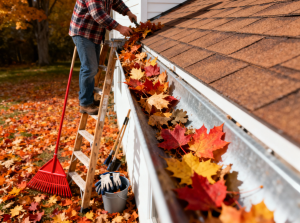
Cleaning your gutters and downspouts is an essential task that can prevent serious water damage to your home. Neglecting gutter maintenance can lead to clogs, overflow, and costly repairs.
Start by removing debris like leaves and twigs from the gutters using a sturdy ladder and gloves. For downspout cleaning, guarantee water flows freely by using a plumber’s snake or a garden hose to flush out any blockages.
Check for signs of rust or damage while you’re up there; replacing any damaged sections now can save you headaches later. Regularly scheduled gutter maintenance not only protects your home’s foundation but also enhances its curb appeal.
You belong to a community that values a well-maintained home—take pride in this essential upkeep!
Seal Drafts and Insulate
To keep your home cozy this fall, start by inspecting your windows and doors for any gaps that could let cold air in.
Adding weatherstripping and caulking can greatly reduce drafts, enhancing energy efficiency.
Don’t forget to insulate your attic and pipes to maintain ideal temperatures and lower heating costs.
Inspect Windows and Doors
One of the most effective ways to enhance your home’s energy efficiency this fall is by inspecting windows and doors for drafts.
Start with window maintenance; check for any gaps or cracks in the frame. A simple visual inspection can reveal issues that need your attention.
Next, focus on door sealing. Verify that your exterior doors close tightly and look for any deterioration around the edges. If you find any problems, note them down for repair.
Not only will addressing these issues keep your home cozy, but it’ll also lower your energy bills. Taking the time to inspect and address drafts now will make a significant difference as temperatures drop, creating a comfortable space for you and your family.
Add Weatherstripping and Caulking
Adding weatherstripping and caulking is crucial for sealing drafts and improving your home’s insulation this fall.
Weatherstripping benefits include reducing energy bills and enhancing comfort by preventing cold air from entering your home. Start by inspecting doors and windows for gaps. Choose the right weatherstripping material, such as foam or vinyl, and apply it according to manufacturer instructions for the best results.
For caulking, use high-quality, flexible caulk that can withstand temperature changes. Clean the surfaces thoroughly before applying, and use a caulking gun for precision. This isn’t too difficult a job.
Smooth the bead with a finger or a caulk-smoothing tool to guarantee a tight seal. By mastering these caulking techniques, you’ll protect your home from harsh winter elements and create a cozy, welcoming environment.
Insulate Attic and Pipes
While you’re already sealing drafts with weatherstripping and caulking, don’t overlook the importance of insulating your attic and pipes. Proper attic insulation not only keeps your home warm but also reduces energy bills.
Consider using fiberglass batts or spray foam for effective coverage. Check for gaps or spaces where heat can escape, and guarantee your insulation reaches the recommended R-value for your climate zone.
For pipe insulation, wrap exposed pipes in foam sleeves to prevent freezing and conserve heat. Pay special attention to areas like basements and crawl spaces.
Check Smoke and Carbon Monoxide Detectors
Regularly checking your smoke and carbon monoxide detectors is essential for ensuring your home’s safety.
Start by conducting detector testing at least twice a year. Press the test button on each unit to confirm it’s functioning properly. If you hear no sound, replace the batteries immediately or the entire unit if it’s over ten years old.
Next, perform thorough safety checks by ensuring all detectors are installed in key areas—like the kitchen, hallways, and bedrooms. Remember to keep them free from dust and obstructions.
Encourage family members to recognize the sound of alarms, fostering a shared sense of safety.
Winterize Your Plumbing
As temperatures drop, winterizing your plumbing becomes essential to prevent costly damage.
Start by inspecting your pipes for leaks and addressing any issues. Next, wrap exposed pipes, especially those in unheated areas, with pipe insulation to protect them from freezing.
Don’t forget about your outdoor faucets—drain and shut them off to avoid burst pipes. For faucet maintenance, check for any drips or leaks and repair them before winter sets in.
If you have a sprinkler system, drain it completely to prevent ice damage. Finally, consider adding heat tape to vulnerable pipes for extra protection.
Taking these precautions not only safeguards your home but also guarantees your plumbing remains in top shape all winter long.
Prepare Your Fireplace
Before you light your first fire of the season, it’s crucial to prepare your fireplace to guarantee safety and efficiency.
Start with a thorough fireplace cleaning, removing ashes and soot, which can pose fire hazards. This not only improves air quality but also enhances the fire’s efficiency.
Next, schedule a chimney inspection to identify any blockages or damage that could lead to dangerous creosote buildup. A professional inspection is key to ensuring your chimney is safe and functioning correctly.
Don’t overlook the importance of checking the damper and flue as well; they should open and close smoothly.
Store Outdoor Furniture and Equipment
To protect your outdoor furniture and equipment from harsh winter weather, it’s vital to store them properly.
Start by cleaning each item to remove dirt and debris, which can cause damage over time. Once clean, disassemble any furniture if possible to save space.
Invest in quality outdoor storage solutions, like weather-resistant bins or sheds, to keep your items safe from moisture and pests.
For pieces that remain outside, use durable furniture covers that fit snugly to shield them from snow and ice. Don’t forget to cover grills and tools, too.