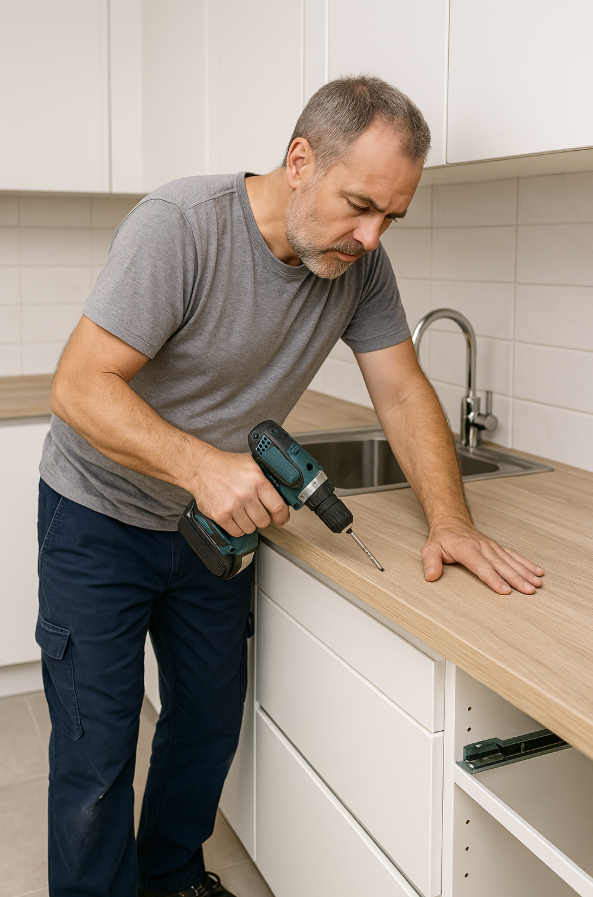
Our comprehensive Guide to Kitchen Countertops walks you through the pros, cons, and costs of the most popular options, from the timeless elegance of natural stone to the low-maintenance durability of engineered quartz. Before you spend thousands, you need to understand key factors like heat resistance, maintenance requirements, and overall lifespan to select the surface that fits your cooking habits and budget.
When choosing kitchen countertops, consider quartz for its non-porous, easy-to-clean surface and wide color options. Granite brings timeless elegance with its unique patterns and durability, though it requires sealing. Butcher block offers a warm, natural feel, perfect for food prep but needs regular maintenance. Each option has distinct advantages and costs that can impact your decision. Keep exploring the unique traits of each material to find the perfect fit for your kitchen.
Understanding Quartz Countertops
When you’re considering kitchen countertops, quartz is a popular choice due to its durability and low maintenance. This engineered stone combines natural quartz with resins, making it non-porous and resistant to stains, bacteria, and scratches.
You won’t have to worry about sealing it regularly, unlike natural stones. Plus, quartz countertops come in a wide variety of colors and patterns, allowing you to customize your kitchen’s look.
They’re also easy to clean; a simple wipe with soap and water is often all you need. However, keep in mind that quartz can be sensitive to heat, so using trivets or hot pads is a good idea.
The Benefits of Granite Countertops
If you’re looking for a timeless and elegant option, granite countertops might be the perfect fit for your kitchen. They offer a natural beauty that adds sophistication and warmth to any space.
One major benefit is their durability; granite is heat and scratch-resistant, making it an ideal choice for busy kitchens. Plus, each slab is unique, giving your kitchen a one-of-a-kind look.
Maintenance is minimal, as regular sealing keeps it looking pristine. Additionally, granite can increase your home’s resale value, appealing to potential buyers. Its resistance to bacteria makes it a hygienic choice for food preparation.
Exploring Butcher Block Countertops
While granite countertops offer a sleek, modern look, butcher block countertops bring a warm, inviting feel to your kitchen.
These surfaces are typically made from hardwoods like maple, walnut, or cherry, providing a natural aesthetic that complements various design styles.
You’ll find that butcher block isn’t only visually appealing but also functional; its surface is perfect for food preparation, allowing for easy chopping and slicing.
Plus, they can be sanded and refinished, giving you the ability to maintain their beauty over time.
When you choose butcher block, you’re also incorporating sustainability, as many options use reclaimed materials.
Durability and Maintenance Comparisons
Although butcher block countertops offer a charming aesthetic, their durability and maintenance requirements can differ considerably from other materials like granite or quartz.
Butcher block needs regular oiling to prevent drying and cracking, while granite and quartz are more resistant to staining and scratches. Granite can handle heat better than butcher block but still requires sealing every year or so to maintain its integrity.
Quartz, being non-porous, doesn’t need sealing and is generally easier to clean. If you’re looking for low maintenance, quartz is your best bet.
But if you love the warmth of wood and don’t mind a little upkeep, butcher block can be a great choice. Ultimately, it depends on your lifestyle and how much time you want to invest in maintenance.
Aesthetic Appeal and Design Options
What draws you to a particular countertop style? Is it the sleek, modern look of quartz, the natural beauty of granite, or the warm, rustic charm of butcher block?
Each option offers unique aesthetic appeal and design possibilities. Quartz comes in a variety of colors and patterns, allowing you to customize your kitchen’s vibe effortlessly.
Granite, with its unique veining and texture, brings an organic touch that can elevate any space. Butcher block adds warmth and character, perfect for a cozy, inviting kitchen.
Think about your overall design vision. Do you prefer a minimalist approach, or are you drawn to a more traditional feel? Choosing the right countertop can truly transform your kitchen’s aesthetic.
Cost Considerations for Each Material
Cost is a crucial factor when choosing the right countertop material for your kitchen.
Quartz countertops typically range from $50 to $150 per square foot, offering a balance of affordability and durability.
Granite, known for its natural beauty, usually costs between $40 and $200 per square foot, depending on the rarity of the stone.
Butcher block countertops, while charming, can vary widely, generally falling between $30 and $150 per square foot, influenced by the type of wood used.
Remember to factor in installation costs, which can add an extra $30 to $100 per square foot.
Keep your budget in mind, and choose a material that aligns with both your financial plan and your design vision.
Making the Right Choice for Your Kitchen
How do you decide which countertop material is best for your kitchen? First, consider your cooking habits. If you often prepare meals, durable materials like quartz or granite can withstand heavy use.
Next, think about maintenance. Quartz requires less upkeep, while butcher block needs regular oiling to prevent damage.
Also, evaluate your kitchen’s style. Quartz offers a modern look, granite brings natural beauty, and butcher block provides warmth.
Budget is another factor—compare costs of each material and find what fits your financial plan.
Finally, don’t forget about resale value; some materials can enhance your home’s appeal.