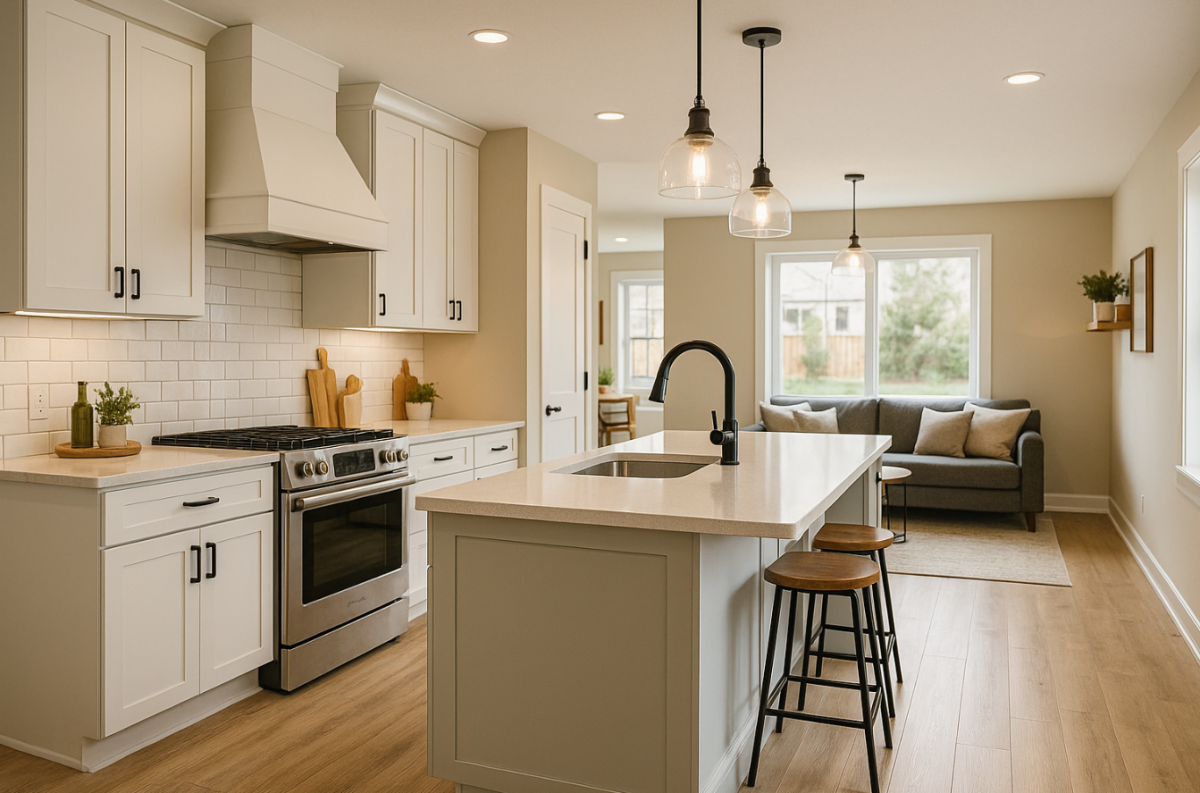
When you consider an open-concept kitchen, think about how each element interacts to create a harmonious space. The layout, flow, and even the choice of materials can greatly impact functionality and aesthetics. You’ll want to explore popular designs and practical solutions that enhance both cooking and socializing. However, it’s easy to overlook key aspects that can lead to frustration. What common pitfalls should you watch out for as you begin this design journey?
Understanding the Open-Concept Kitchen Trend
Have you ever wondered why open-concept kitchens have surged in popularity? This design evolution traces back to the mid-20th century when families sought more interactive spaces.
Traditional walls separating kitchens from dining and living areas began to dissolve, fostering togetherness. You can visualize a seamless flow where cooking, eating, and socializing intertwine, creating a warm, inviting atmosphere.
The open concept history reflects a shift toward multifunctional spaces that accommodate modern lifestyles. As you step into an open kitchen, you’ll notice how natural light floods the area, enhancing its spaciousness.
This layout encourages conversations and connection, embodying a sense of belonging that resonates with families and friends alike. Embracing this trend means embracing a lifestyle that thrives on togetherness.
Benefits of Open-Concept Layouts
Open-concept layouts offer numerous advantages that cater to the needs of modern households. By removing barriers between spaces, you create an inviting atmosphere that encourages social interaction, allowing family and friends to gather effortlessly.
Picture yourself cooking while still being part of the lively conversations happening in the living room. Increased visibility enhances your sense of belonging, as you can easily keep an eye on kids playing or guests mingling. This design fosters a cohesive flow, making entertaining a breeze.
Natural light also floods the space, creating a warm, welcoming environment. Ultimately, embracing an open-concept layout transforms your home into a vibrant hub where connections flourish and memories are made, ensuring everyone feels included and engaged.
Key Elements of a Functional Open-Concept Kitchen
Creating a functional open-concept kitchen hinges on incorporating key elements that enhance both usability and aesthetics.
Start with kitchen ergonomics; guarantee your workspace promotes comfort and efficiency. Position countertops at a height that feels natural for you, allowing for easy meal prep.
Thoughtful appliance placement is vital—keep your refrigerator, stove, and sink within a convenient triangle to streamline your cooking process.
Utilize cabinetry that offers ample storage while maintaining open sightlines, so the space feels inviting and cohesive.
Incorporate proper lighting, blending ambient and task lighting to create a warm atmosphere.
Finally, select materials and colors that resonate with your style, fostering a sense of belonging as you gather with family and friends in this beautiful, functional space.
Popular Layouts for Open-Concept Kitchens
When designing an open-concept kitchen, considering popular layouts can greatly enhance both functionality and aesthetics.
One popular layout variation is the L-shaped design, which efficiently utilizes corner space while promoting a natural flow between cooking and dining areas.
For a more expansive feel, the U-shaped layout offers ample counter space and storage, inviting gatherings and conversation.
If you prefer a modern touch, the island layout creates a central hub, perfect for meal prep and casual dining.
Each design style provides unique opportunities for creativity and connection, making your kitchen the heart of your home.
Maximizing Space With Smart Storage Solutions
In an open-concept kitchen, utilizing vertical storage options can transform your space while keeping essentials within reach.
Consider incorporating shelves that stretch to the ceiling or wall-mounted racks for pots and pans, making every inch count.
Pair these with multi-functional furniture, like an island that doubles as a dining table, to create a seamless blend of style and practicality.
Vertical Storage Options
To make the most of your open-concept kitchen, consider harnessing vertical storage options that draw the eye upward while maximizing every inch of space.
Wall-mounted storage, like sleek shelves or pegboards, not only creates a visual impact but also elevates your kitchen essentials. Think about stylish shelf organization—grouping your favorite cookbooks, vibrant jars, or elegant dishware can enhance both functionality and aesthetics.
You can even install magnetic strips for knives or spice racks, keeping your counters clear while adding charm.
Don’t forget to utilize the space above cabinets for decorative baskets or plants, which can soften the room’s look.
Embrace these vertical solutions, and you’ll transform your kitchen into a beautifully organized and welcoming space.
Multi-Functional Furniture
Multi-functional furniture can revolutionize your open-concept kitchen by seamlessly blending style with practicality.
Imagine a sleek multi-purpose table that serves as both a dining space and a food prep area, transforming your kitchen into a hub of activity. When guests arrive, simply flip the tabletop to reveal hidden storage for utensils or pantry items.
Pair this with convertible seating that effortlessly changes from stylish stools to comfortable benches, catering to both intimate dinners and lively gatherings.
These innovative pieces not only maximize your space but also enhance the flow of your kitchen, fostering a sense of belonging and connection.
Embrace these smart storage solutions and watch your kitchen become an inviting haven for family and friends.
Enhancing Traffic Flow in Your Kitchen
To enhance traffic flow in your kitchen, start by optimizing the work triangle design, positioning your sink, stove, and refrigerator within easy reach.
Make sure to create clear pathways that allow for smooth movement, preventing bottlenecks during meal prep and entertaining.
With these adjustments, your kitchen will feel more spacious and functional, making cooking a joy rather than a chore.
Optimize Work Triangle Design
When you design your open-concept kitchen, optimizing the work triangle can greatly enhance traffic flow and efficiency.
Picture your stove, refrigerator, and sink forming a triangle, with each point ideally spaced within 4 to 9 feet of each other. This triangle optimization minimizes unnecessary steps, making cooking a breeze.
Ascertain these key areas are unobstructed by cabinets or islands, allowing easy access for everyone in the kitchen.
Consider your workspace layout: a clean, organized environment fosters kitchen efficiency, inviting family and friends to gather.
By thoughtfully arranging your kitchen’s elements, you create a welcoming atmosphere where culinary creativity flows effortlessly, strengthening connections over shared meals and experiences.
Embrace the beauty of design that serves both function and togetherness.
Consider Clear Pathways
While planning your open-concept kitchen, it’s crucial to take into account clear pathways that enhance traffic flow.
Imagine moving effortlessly between the fridge, stove, and sink without obstructions. Effective pathway planning guarantees you can engage with family and friends while preparing meals.
Aim for at least 36 inches of clearance in high-traffic areas to avoid crowding and accidents. This space optimization will make your kitchen feel more inviting and functional.
Visualize an island that not only serves as a prep area but also creates natural shifts between cooking and dining spaces.
Choosing the Right Color Palette
As you commence designing your open-concept kitchen, selecting the right color palette can transform the space into a cohesive and inviting area.
Consider the principles of color psychology—warm tones like yellows and reds evoke energy, while cool shades like blues and greens promote tranquility.
To achieve palette harmony, blend complementary colors that flow seamlessly from the kitchen to adjacent living spaces. For instance, pairing soft cream cabinets with earthy green accents creates a soothing backdrop, while pops of vibrant colors can add personality.
Don’t forget to factor in natural light, as it can alter how colors appear throughout the day.
Ultimately, your chosen palette should reflect your personal style, making the kitchen a welcoming hub for family and friends.
Integrating Islands and Peninsulas
When planning your open-concept kitchen, integrating islands and peninsulas can transform your space into a functional masterpiece.
Consider how these elements enhance workflow, provide additional seating, and serve as focal points for design.
However, it’s essential to avoid common pitfalls that can disrupt the flow and usability of your kitchen.
Design Considerations for Islands
Integrating islands and peninsulas into your open-concept kitchen not only enhances functionality but also creates a focal point that draws people in.
When selecting island styles, consider how they’ll complement your kitchen’s overall design. A sleek, modern island can contrast beautifully with rustic cabinetry, while a traditional style can add warmth.
Think about seating arrangements too; bar stools or cushioned chairs can invite family and friends to gather around. Make sure there’s adequate space for movement—aim for at least 42 inches between the island and surrounding surfaces.
Lighting is vital; pendant lights above the island can create an inviting atmosphere.
Ultimately, it’s about creating a space where everyone feels welcome and connected, making your kitchen the heart of your home.
Peninsula Functionality and Benefits
Peninsulas offer a unique blend of functionality and style, seamlessly connecting the kitchen to the dining or living areas. With their extended countertops, they provide ample peninsula seating, perfect for casual meals or gatherings.
Imagine friends chatting while you chop vegetables or your kids completing homework nearby.
Additionally, peninsulas enhance your kitchen’s efficiency by offering peninsula storage, allowing you to tuck away utensils, pots, and other essentials within easy reach. This clever design not only keeps your space organized but also fosters a sense of togetherness.
Whether you’re entertaining guests or enjoying family time, a peninsula serves as a versatile hub that invites connection and creativity, making your kitchen the heart of your home.
Common Design Mistakes
Designing an open-concept kitchen with islands and peninsulas can be exciting, but it’s easy to overlook key details that lead to frustrating mistakes.
Common design errors include inadequate clearance around your island, which can create layout pitfalls when cooking or entertaining. Make sure you have at least 42 inches of space between the island and surrounding counters for smooth traffic flow.
Another mistake is neglecting the island’s function; if it’s just for looks, you miss out on its potential. Consider incorporating storage or seating to enhance usability.
Finally, don’t underestimate lighting; poorly placed fixtures can dim the atmosphere, making your beautiful design feel cramped.
Lighting Strategies for Open Spaces
While you might think open spaces naturally benefit from ample sunlight, effective lighting strategies are vital to enhance the ambiance and functionality of your kitchen.
Start with ambient lighting to create a warm foundation; consider dimmable options to set the mood for gatherings. For task lighting, pendant fixtures above islands deliver focused illumination, while under cabinet illumination brightens your workspace.
Don’t forget about natural light—maximize it with strategically placed windows or skylights. Light layering is key; combine different sources with varying color temperatures to avoid harsh shadows.
Pay attention to fixture placement to guarantee energy efficiency and comfort. With thoughtful design, your open kitchen will feel inviting, stylish, and perfectly functional for every occasion.
Creating Distinct Zones Within an Open Kitchen
How can you transform an open kitchen into a functional and inviting space? Start by defining distinct zones that cater to your lifestyle.
Use furniture and decor to create space delineation; a kitchen island serves as a cooking zone, while a cozy dining table can mark the eating area.
Consider varying flooring materials or area rugs to enhance visual separation. Incorporate open shelves or decorative screens to maintain airflow and light while clearly indicating different purposes.
For social gatherings, guarantee the zones encourage interaction, blending functionality with warmth.
Common Mistakes to Avoid in Open-Concept Design
When planning an open-concept kitchen, overlooking key design principles can lead to a chaotic and uninviting space. One common mistake is ignoring layout considerations; guarantee that your cooking, dining, and living areas flow seamlessly together. A poorly arranged kitchen can disrupt the harmony of your home, making it feel cramped.
Additionally, don’t neglect the importance of design elements like lighting and color schemes. Dim lighting or clashing colors can create an unwelcoming atmosphere.
Finally, avoid overcrowding surfaces with decor or appliances; this can make the space feel cluttered and overwhelming.
Tips for Personalizing Your Open Kitchen
As you begin personalizing your open kitchen, consider infusing your unique style into every corner to create a space that truly reflects who you are.
Start by selecting a color palette that resonates with you; warm hues invite coziness, while cool tones promote calm. Use unique accents like bold cabinet hardware or a striking backsplash to draw the eye.
Incorporate personal touches, such as artwork or family photos, that evoke memories and spark joy. Choose functional decor, like stylish storage solutions or vibrant dishware, that enhances both beauty and practicality.
Finally, don’t shy away from textures; mix woods, metals, and fabrics to create depth and interest. Your open kitchen should feel like a warm embrace, welcoming friends and family into your personalized haven.