Categories
Uncategorized

How To Use Radiator Valves And Thermostats For Zone Heating

Just like any other system in your home, effective heating requires understanding and management. By utilizing radiator valves and thermostats, you can optimize your heating for different zones, ensuring comfort where you need it. This guide will provide you with clear steps on how to adjust your radiator settings and thermostats to enhance energy efficiency and regulate temperatures throughout your living space.

Unlocking Efficiency: The Science of Radiator Valves

Radiator valves play a pivotal role in optimizing your heating system by regulating the flow of hot water to your radiators. By adjusting these valves, you can control how much heat each radiator emits, allowing for personalized comfort in different zones of your home. This precision not only enhances comfort but significantly boosts energy efficiency, reducing your heating bills and carbon footprint.

The Functionality of Radiator Valves

Radiator valves function by controlling the amount of hot water that circulates through your heating system. Manual valves allow you to adjust the flow rate manually, while thermostatic radiator valves (TRVs) automatically regulate the temperature based on your set preferences. By fine-tuning the heat distribution in each room, you achieve a balanced and comfortable environment tailored to your needs.

Benefits of Precision Control in Zone Heating

Precision control in zone heating enables you to customize the temperature in individual rooms, enhancing comfort and efficiency. With the ability to set different temperatures based on usage patterns—like lowering the heat in seldom-used rooms while keeping main living areas warm—you can significantly lower energy consumption. Additionally, this targeted approach minimizes heating waste and can lead to savings of up to 20% on your heating bills compared to conventional systems.

Opting for precision control means your home adapts to your lifestyle rather than forcing you to adjust. For instance, setting lower temperatures in bedrooms for sleeping and higher in living areas during the day allows for significant energy savings without sacrificing comfort. With the right combination of radiator valves and thermostats, you can create a dynamic heating strategy that caters to your specific requirements, maximizing both comfort and cost-effectiveness year-round.

Temperature Control Revolution: Mastering Thermostats

Types of Thermostats for Zone Heating

You can enhance your zone heating by selecting the right thermostat. Various types include mechanical, digital, programmable, and smart thermostats. Each offers unique benefits suitable for different needs and preferences.

Type Features
Mechanical Simple design, manual adjustment
Digital More accurate, easy-to-read display
Programmable Allows setting schedules for different times
Smart Remote control, adaptive learning capabilities
Wi-Fi Enabled Integration with home automation systems
  • Mechanical thermostats are straightforward and reliable.
  • Digital options offer precision and visibility.
  • Programmable models save energy by adjusting schedules.
  • Smart thermostats provide convenience and advanced features.
  • The selection impacts heating efficiency and comfort.

Integrating Smart Technology for Optimal Performance

Adopting smart thermostats revolutionizes your heating control. These devices learn your habits and adjust settings accordingly, promoting energy efficiency. By connecting to your smartphone or home automation system, you can monitor and control temperatures from anywhere, ensuring your home remains comfortable and cost-effective.

Strategic Setup: Designing Your Zoning System

Effective zone heating requires careful planning of your zoning system. Begin by identifying areas in your home that have different heating needs, such as bedrooms, living rooms, and unused spaces. This allows you to install valves and thermostats in a way that optimally manages temperature variations, ensuring comfort without wasting energy. Consider lifestyle patterns, such as occupancy times, to adjust settings for efficiency, providing warmth where it’s needed most at any given time.

Assessing Your Space for Maximum Efficiency

Evaluating your space involves measuring the size of each room and noting their layout. Look for windows, doors, and drafts that can impact heating efficiency. Inspect insulation levels, as well-insulated areas maintain temperature better. By gathering this information, you can prioritize which rooms require more precise heating control and adapt your system accordingly to avoid hotspots and cold spots, ultimately enhancing overall comfort and energy savings.

Step-by-Step Guide to Installing Radiator Valves and Thermostats

Installing radiator valves and thermostats is straightforward. Start by turning off your heating system. Remove the existing radiator valve, if applicable, and install the new thermostatic valve following manufacturer instructions. Connect the thermostat to the appropriate wall location, linking it to your heating system. Ensure that your settings align with the room’s specific needs and energy goals. Finally, test the system to confirm that the adjustments effectively control the temperature as intended.

Installation Process Breakdown

Step Details
1. Turn off the heating system Ensure safety before making any changes.
2. Remove the old valve Use a wrench to disconnect the existing valve carefully.
3. Install the new valve Follow the provided instructions to attach the new thermostatic valve securely.
4. Position the thermostat Choose a wall location away from obstructions and direct sunlight for accurate readings.
5. Connect the thermostat Wire the thermostat to your heating system as per guidelines.
6. Test the system Turn on the heating system to ensure proper functionality and temperature control.

Troubleshooting Common Issues: Avoiding Pitfalls

Zone heating can occasionally present challenges that disrupt your comfort. Addressing common issues proactively ensures optimal performance of your system. Check for valve blockages, improper thermostat calibrations, or inconsistent temperature readings, as these can hinder efficiency. Regular maintenance and awareness of your system’s behavior will help you identify problems early, allowing for timely resolutions that enhance your home’s heating strategy.

Identifying and Fixing Valve Malfunctions

Valve malfunctions may present as inconsistency in room temperatures or cold spots. Inspect valves for leaks, blockages, or stuck mechanisms. You can often resolve minor issues with cleaning or lubrication, while more severe malfunctions might require valve replacement. Keep an eye out for signs of corrosion or wear, as these can also affect the valve’s function and your heating system’s overall performance.

Optimizing Thermostat Settings for Variable Conditions

Variable weather conditions demand adjustments to your thermostat settings for maximum efficiency. During mild weather, consider lowering the temperature to save energy without sacrificing comfort. Utilizing programmable settings lets you schedule heating according to your routine, ensuring warmth when you need it while minimizing energy waste when you’re away or asleep.

For instance, if your region experiences abrupt temperature changes, you might set your thermostat to lower temperatures during the day when the sun warms your home naturally, and then raise it before you return in the evening. This strategy not only enhances comfort but also reduces your energy bill. Incorporating features like adaptive learning thermostats can further refine your temperature settings as they learn your patterns, making automatic adjustments to adapt to changing conditions seamlessly, thus optimizing your zone heating system’s performance year-round.

Future-Proofing Your System: Tips for Long-term Success

To ensure the longevity and efficiency of your zoned heating system, consider the following tips:

  • Regularly inspect and bleed radiator valves.
  • Upgrade to smart thermostats for better control.
  • Insulate pipes and ducts effectively.
  • Consult professionals for annual maintenance checks.

Assume that proactive measures today will save you from costly repairs tomorrow.

Maintenance Best Practices for Longevity

Establishing a routine maintenance schedule enhances your system’s lifespan. Inspect valves and thermostats monthly, ensuring they function properly and respond to adjustments. Keep radiators free of dust and obstructions to maximize heat output. Check for leaks and drips, which can lead to efficiency loss and water damage. Document any issues and professional services performed to maintain an accurate maintenance history.

Upgrading Components for Enhanced Efficiency

Replacing aging components is imperative for improved heating efficiency. Consider investing in high-efficiency thermostats that allow for remote control and programmable settings, enabling better temperature management. Upgrading to electronically modulating radiator valves can also optimize hot water flow, ensuring balanced heating across zones.

New technologies like smart thermostats vary heating demands based on occupancy and real-time weather data, reducing energy wastage. Switching to high-efficiency circulators can improve water flow and minimize energy consumption. By investing in component upgrades, your system can operate with greater responsiveness and energy savings, yielding long-term financial and environmental benefits.

Summing up

Summing up, using radiator valves and thermostats effectively allows you to optimize zone heating in your home. You should adjust radiator valves to control the flow of hot water, ensuring specific rooms receive the desired heat levels. By setting thermostats in each zone, you manage overall temperature and improve energy efficiency. Positioning these devices correctly and programming them according to your schedule empowers you to maintain comfort while minimizing heating costs. Taking these steps ensures that your living environment remains pleasant and energy-efficient throughout the seasons.

Categories
Uncategorized

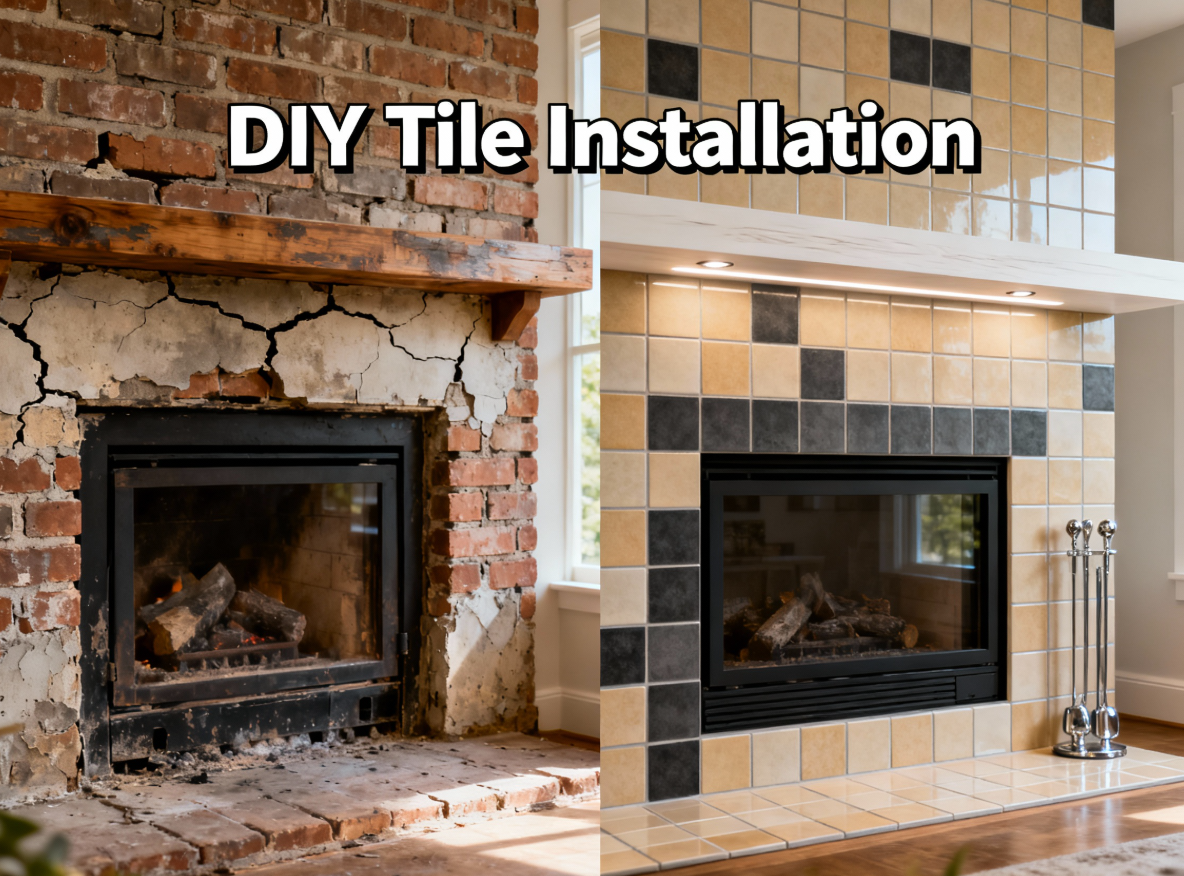
Before & After: Transforming Your Outdated Fireplace with Simple DIY Tile

Your fireplace is the architectural heart of your living room, yet many homes are saddled with bulky, dark, or simply dated brick and brass surrounds. If your unit is an eyesore rather than a cozy centerpiece, it’s time to start Transforming Your Outdated Fireplace. This project does not require expensive demolition; often, the highest impact changes involve simple DIY techniques like painting the brick, adding shiplap to the tablecloth, or applying a modern tile overlay. We cover the most effective, budget-friendly strategies to update your hearth and give your entire room a dramatic, contemporary refresh.


If your fireplace feels outdated, a simple DIY tile project can transform it into a stunning focal point. Start by evaluating its current style and condition, then choose tiles that match your taste. With the right materials and a bit of planning, you’ll be on your way to a fresh look. Want to know how to tackle each step for a seamless installation? Let’s explore the process together.

Assessing Your Current Fireplace

Before diving into your fireplace transformation, it’s essential to assess your current setup.

Take a good look at your fireplace style and how it fits into your living space. Is it outdated, or does it still have charm? Make notes on its condition—cracks, discoloration, or wear can affect functionality.

Consider how you use the fireplace: does it serve as a cozy gathering spot, or is it just decorative? A functionality assessment will help you determine what changes you need.

Take photos from different angles to visualize potential updates. This step not only informs your design choices but also connects you to your home’s story.

Embrace this process; your fireplace has the power to bring warmth and connection to your space.

Choosing the Right Tile

When you’re ready to elevate your fireplace, choosing the right tile can make all the difference.

Start by reflecting on tile materials—ceramic, porcelain, or natural stone each offer unique styles and durability. Think about how these materials fit into your home’s aesthetic.

Next, let’s talk color combinations. You might want earthy tones for a cozy feel or bold colors to create a statement. Picture how those colors will harmonize with your living space; it’s about creating a welcoming vibe.

Don’t forget to contemplate the size and shape of the tiles, too. Larger tiles can make a small space feel grand, while smaller tiles can add intricate detail.

Trust your instincts, and choose what resonates with your personal style!

Preparing Your Workspace

Now that you’ve chosen the perfect tile for your fireplace, it’s time to focus on your workspace. Start by clearing the area around your fireplace. A clean, organized workspace makes all the difference!

Lay down a drop cloth to protect your flooring from dust and debris. Gather your tools and materials, keeping them within arm’s reach for easy access.

Don’t forget about safety precautions! Wear gloves and goggles to protect yourself from sharp edges and dust. If you’re using a power tool, guarantee you have adequate lighting, so you can see what you’re doing.

An organized space not only enhances efficiency but also makes the whole process more enjoyable. Get ready to transform that fireplace into the centerpiece it deserves to be!

Gathering Your Materials

Gathering your materials is an essential step in your fireplace transformation. First, decide on the tile types you want—ceramic, porcelain, or glass can each bring a unique flair. Picture how they’ll complement your living space!

Next, head to reliable material sources like local home improvement stores or online retailers. Don’t forget to grab adhesive, grout, and any necessary tools, like a tile cutter or spacers. If you’re unsure, many stores offer samples, which can help you visualize your design before committing.

It’s all about creating a space that feels like home, so take your time selecting pieces that resonate with your style. With everything ready, you’ll feel excited to plunge into your DIY project!

Removing Old Surrounds

Removing old surrounds is an essential step in your fireplace transformation, and it can be a bit of a workout!

First, assess the surround materials—whether they’re brick, wood, or tile. Depending on what you find, you’ll need different removal techniques. For tile, a chisel and hammer work wonders; just be careful not to damage the underlying surface.

If you’re dealing with wood, a pry bar can help you carefully lift the boards away. Always wear safety goggles and gloves to protect yourself.

As you peel away the old layers, visualize your new design taking shape. It’s a rewarding process, and soon, you’ll be ready to create a cozy centerpiece that truly reflects your style!

Cleaning and Repairing the Surface

After stripping away the old surrounds, you’ll want to focus on cleaning and repairing the surface to confirm a smooth foundation for your new design.

Start with some effective cleaning techniques—use a mixture of warm water and mild soap to scrub away any grime. A stiff brush can help tackle stubborn spots.

Once it’s clean, inspect the surface for any cracks or chips. For surface repairs, fill these imperfections with a patching compound, smoothing it out for an even finish.

Don’t forget to let it dry completely before moving on to tile placement. A well-prepped surface not only enhances the look but also confirms your new tiles adhere properly, making your fireplace a cozy focal point in your home.

Measuring and Planning Your Tile Layout

Before you plunge into tile placement, it’s essential to measure and plan your layout carefully—this step can make or break your fireplace transformation.

Start by determining your tile dimensions. Measure the area you want to cover, noting any obstacles like mantels or built-ins.

Next, visualize your layout patterns. Do you want a classic grid, a herringbone, or something more unique? Lay the tiles out on the floor first to see how they interact with your space. This helps you catch any potential issues before committing.

Take your time here; a well-planned layout not only looks great but also makes installation smoother. You’re creating a cozy spot that reflects your style, so make it count!

Applying Tile Adhesive

Now that you’ve got your tile layout planned, it’s time to choose the right adhesive for your project.

You’ll want something that bonds well and can handle the heat, so check the labels carefully.

When applying the adhesive, spread it evenly with a notched trowel to guarantee your tiles stick perfectly.

Choosing the Right Adhesive

Choosing the right adhesive for your tile is essential to guarantee a lasting, beautiful finish on your fireplace transformation.

You’ll encounter various tile adhesive types, like thin-set mortar or mastic, so consider your tile’s surface compatibility. For instance, if you’re tiling a non-porous surface, mastic might be your best bet. On the other hand, thin-set works well for more porous materials.

Don’t forget to read the manufacturer’s recommendations to ascertain you’re picking the right adhesive for your specific tiles and fireplace material.

It’s all about creating a solid bond that stands the test of time. So, gather your supplies, choose wisely, and get ready to transform your space into a cozy gathering spot for friends and family!

Applying Adhesive Evenly

With the right adhesive in hand, you’re ready to start applying it to your fireplace.

First, choose the adhesive type that suits your tiles—thin-set mortar for heavier tiles or adhesive mastic for lighter ones.

Use a notched trowel to spread the adhesive evenly across the surface. Hold the trowel at a 45-degree angle for those perfect ridges that help create a strong bond.

Don’t rush; work in small sections so the adhesive doesn’t dry out before you place your tiles.

Remember, less is more—too much adhesive can lead to uneven tiles.

Follow these application tips, and you’ll create a beautiful, cohesive look that makes your fireplace the heart of your home!

Installing the Tiles

As you plunge into the exciting process of installing the tiles, keep in mind that preparation is key to achieving a polished look.

Start by laying out your tiles in the desired pattern, following current fireplace design trends. This visual guide helps you see how they’ll fit together before you begin.

Using effective tile installation techniques, apply each tile firmly, ensuring even spacing. Don’t be afraid to adjust as you go; it’s all part of the creative process!

If you’re using different sizes or colors, take your time to create a balanced appearance.

Grouting the Tiles

Once your tiles are securely in place, grouting is the next step that brings everything together. Choose the right grout type—either sanded for wider joints or unsanded for thinner ones.

Grab a grout float and scoop some grout onto it, spreading it diagonally over the tiles to fill the gaps. Don’t worry about getting it perfect; you’re just aiming to fill those spaces!

Now, let’s talk grout colors. This is where you can really personalize your fireplace. A light grout can create a clean, modern look, while a darker shade can add depth and warmth.

Once you’ve filled the joints, wipe off any excess with a damp sponge. You’re one step closer to enjoying your stunning new fireplace!

Sealing and Finishing Touches

Now that you’ve grouted your tiles, it’s time to seal the deal!

Choosing the right sealant will protect your hard work, while proper application techniques guarantee it lasts.

Don’t forget those final touches that’ll make your fireplace pop and truly reflect your style!

Choosing the Right Sealant

How can you guarantee your DIY fireplace transformation stands the test of time? Choosing the right sealant is key.

Look for sealant types that suit your tile material—silicone, epoxy, or acrylic are popular choices. Each type offers unique benefits, so consider the look and durability you want. For instance, silicone provides flexibility and water resistance, while epoxy is incredibly tough and ideal for high-traffic areas.

When it comes to application methods, make certain you follow the manufacturer’s instructions for the best results.

Whether using a caulking gun or a brush, a clean, even layer will help protect your beautiful work. By taking these steps, you’ll not only enhance the look of your fireplace but also make sure it remains a cherished gathering spot for years to come.

Application Techniques for Durability

While you might be enthusiastic to show off your newly transformed fireplace, taking the time to master application techniques can make all the difference in its longevity.

Start by applying your chosen sealant evenly, focusing on the grout lines and edges. This guarantees maximum protection against moisture and wear, two key durability factors.

Don’t rush; allow each coat to dry fully before applying another. After sealing, perform regular tile maintenance by cleaning gently with non-abrasive materials to avoid damaging your new surface.

A little care goes a long way in maintaining that fresh look and extending the life of your beautiful tile.

Final Touches for Aesthetics

With your fireplace sealed and protected, it’s time to turn your attention to the finishing touches that will elevate its aesthetic appeal.

Start by adding decorative accents that reflect your style—think candle holders, art pieces, or even a cozy throw draped nearby. For color coordination, choose items that complement your tile tones; this creates a cohesive look that feels inviting and harmonious.

Consider incorporating greenery, like potted plants or flowers, to breathe life into the space.

Finally, don’t forget about the lighting—soft, warm lights can highlight your fireplace’s beauty and create a welcoming atmosphere.

These thoughtful details won’t only enhance your fireplace but also foster a sense of belonging in your home.

Styling Your Updated Fireplace

Your updated fireplace is the perfect canvas for showcasing your personal style, and it’s time to make it shine.

Start by choosing a color scheme that complements your room—think warm earth tones or cool blues.

Layer your fireplace decor with a mix of textures; try candles, framed art, or even a stylish clock to create visual interest.

Don’t forget to incorporate greenery—plants can add a fresh touch and warmth to your space.

Arrange your decor thoughtfully, ensuring it feels balanced and inviting.

Consider adding a cozy throw or decorative basket nearby to enhance that sense of belonging.

With these tips, your fireplace won’t only be a focal point but also a reflection of your unique style.

Categories
Uncategorized

How To Hang Curtains

Hanging curtains seems simple, but getting it wrong can make your windows look small, your ceilings low, and your room feel cramped. Knowing the correct technique for how to hang curtains is a transformative skill that allows you to instantly upgrade your room’s aesthetic, maximizing natural light and adding a sense of height.

This isn’t just about covering glass; it’s about strategic placement. We walk you through the essential measurements, hardware selection, and insider design tricks to ensure your curtains are hung perfectly—making your entire room feel bigger and more professionally decorated. So, if you’re ready to elevate your room’s aesthetic, let’s explore the essential steps for achieving a flawless finish.

Choosing the Right Curtain Hardware


When it comes to choosing the right curtain hardware, the options can feel overwhelming, but don’t worry—let’s break it down.

Start by considering the style of your space. If you’re after a modern vibe, sleek metal rods can add a chic touch. For a more rustic look, think wooden rods with decorative finials that invite warmth.

Pay attention to color, too; coordinating with your curtains can create a harmonious flow. Don’t forget about functionality! Brackets should be sturdy enough to support your chosen fabric, while rings or clips can add a delightful touch of elegance.

Ultimately, choose hardware that resonates with your personal style and makes your space feel like home, because you deserve a sanctuary that reflects your unique essence.

Measuring and Positioning Your Curtains


To achieve a beautifully draped window treatment, getting your measurements right is essential. Start by measuring the width of your window, then add extra for fullness—typically 1.5 to 3 times the width.

Next, determine the desired length, whether you want your curtains to graze the floor or float elegantly above it. Position your curtain rod at least 4-6 inches above the window frame to create an illusion of height and allow more light to enter.

Make sure to hang the rod wider than the window to let the fabric stack back beautifully when open. With these thoughtful measurements, you’ll not only enhance your space’s aesthetics but also create a warm, inviting atmosphere that makes everyone feel at home.

how to hang curtains

Installation Tips for a Flawless Finish


With your measurements in hand and a clear vision for your curtains, it’s time to bring that vision to life through careful installation. Start by marking the drill points with a pencil, ensuring everything’s level.

Use a stud finder to anchor those brackets securely; nothing feels better than knowing your curtains are safe and sound. When hanging, allow your curtains to kiss the floor for an elegant touch.

If you’re using tiebacks, position them at eye level for a cohesive look. Finally, step back and admire the drape—adjust as needed to achieve that perfect flow.

With attention to detail, you’ll create a warm, inviting space that feels uniquely yours.

Categories
Uncategorized

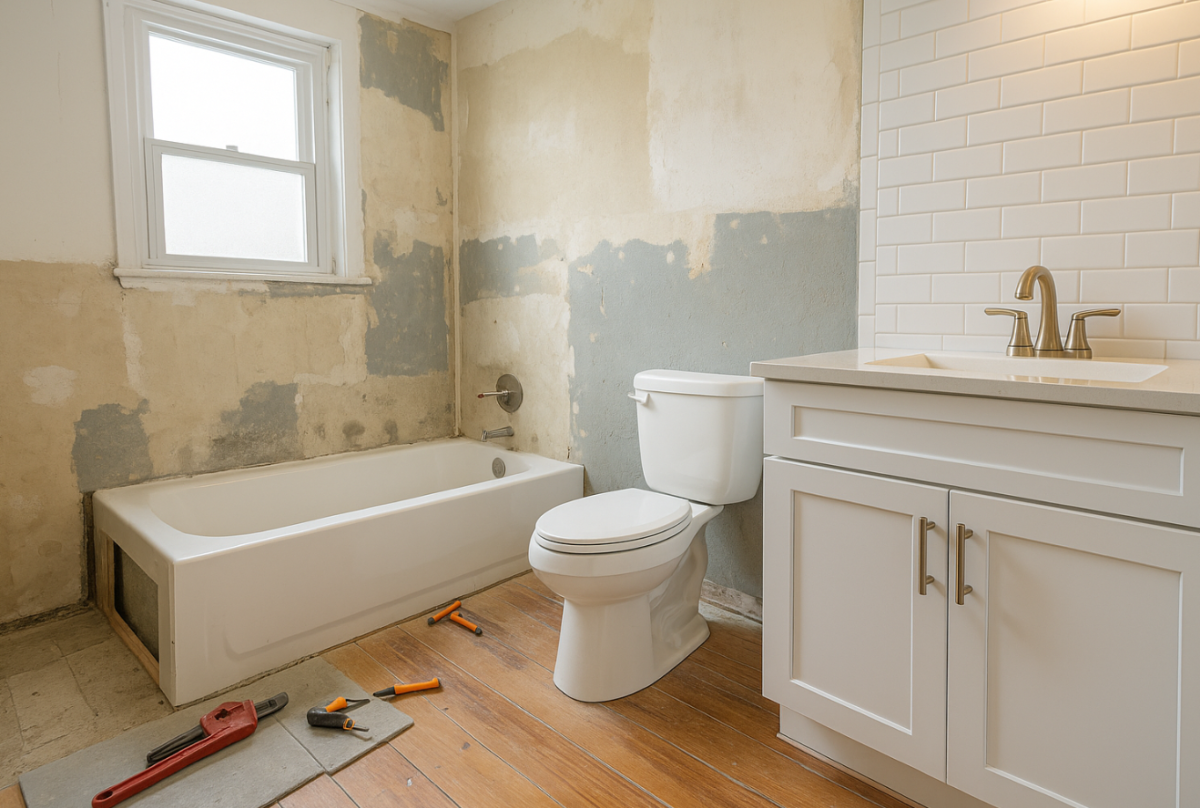
How Much Does a Full Bathroom Remodel Cost?

full bathroom remodel usually costs between $10,000 and $25,000. This price depends on the project’s scope and the materials you choose. If you want high-quality fixtures and skilled labor, your budget might increase. Remember, luxurious materials are durable but come with a higher price tag. With thoughtful planning and budgeting, you can create a beautiful space without overspending. There’s more to know about influencing factors and budgeting strategies, so keep exploring!

Understanding the Average Cost of a Bathroom Remodel

When considering a bathroom remodel, understanding the average cost can help you make informed decisions that fit your budget.

Typically, average costs for a full bathroom remodel range from $10,000 to $25,000, depending on the scope and materials you choose.

It’s essential to stay updated on remodeling trends, as they can influence your choices and budget. For instance, opting for energy-efficient fixtures or modern tiles might initially seem pricier but can save you money in the long run.

Investing in quality materials and skilled labor often pays off, enhancing your home’s value.

Key Factors Influencing Bathroom Remodeling Costs

When planning your bathroom remodel, several key factors can greatly influence the overall cost.

The quality of materials you choose, the breakdown of labor costs, and the complexity of your design all play vital roles in determining your budget.

Understanding these elements will help you make informed decisions and keep your project on track.

Material Quality Impact

Although you might be tempted to cut costs with lower-quality materials, the impact on your bathroom remodel can be significant.

Choosing budget materials may save you money upfront, but they often wear out faster and can lead to costly repairs in the long run.

On the other hand, opting for luxury materials can elevate your space, providing durability and a sophisticated look.

Think about high-quality tiles, elegant countertops, and stylish fixtures that not only enhance your bathroom’s aesthetic but also add value to your home.

When planning your remodel, weigh the long-term benefits of investing in quality materials against initial savings.

In the end, a well-thought-out choice can make all the difference in your bathroom’s functionality and appeal.

Labor Costs Breakdown

Investing in quality materials sets the stage, but labor costs can greatly impact your overall bathroom remodel budget. Understanding current labor wage trends is essential for estimating these expenses.

Skilled tradespeople like plumbers and electricians typically command higher wages, reflecting their expertise. When you’re ready to hire contractors, don’t shy away from negotiations; many are open to discussing pricing, especially if you have multiple projects in mind.

Be sure to get multiple quotes to compare rates and gauge the market. Remember, while it might be tempting to cut costs by opting for cheaper labor, investing in skilled professionals often pays off in the long run through quality workmanship and fewer issues down the line.

Design Complexity Factors

Design complexity plays an essential role in determining your bathroom remodel costs, as the intricacy of your plans can greatly affect both materials and labor expenses.

If you’re following the latest design trends, like floating vanities or intricate tile patterns, expect to pay a premium. Additionally, layout optimization can complicate your project. Moving plumbing fixtures or walls requires skilled labor and can notably increase costs.

The more customized your design, the higher the potential expenses. To keep your budget in check, consider simplifying your design or choosing readily available materials. Balancing aesthetic desires with practical solutions can help you achieve a beautiful bathroom without overspending.

Budgeting for Fixtures and Fittings

When planning your bathroom remodelbudgeting for fixtures and fittings can make or break your project. You’ll need to decide between luxury fixtures that elevate your space and budget fittings that keep costs down.

Start by listing essential items like faucets, sinks, and lighting. Research prices to find a balance that fits your vision and wallet.

Consider where you can splurge—perhaps on a high-end showerhead or stylish vanity—while saving on items like towel bars or basic faucets.

Don’t forget to factor in costs for installation and any necessary plumbing adjustments.

The Importance of Labor Costs

When planning your bathroom remodel, don’t underestimate the impact of labor costs on your overall budget.

Skilled labor rates can vary greatly based on your location and the complexity of the project.

Understanding these factors will help you allocate your resources effectively and avoid surprises down the line.

Skilled Labor Rates

While you might focus on selecting tiles and fixtures for your bathroom remodel, don’t overlook the impact of skilled labor rates on your overall budget.

Hiring professionals in skilled trades guarantees that your project is completed efficiently and to a high standard. The expertise of plumbers, electricians, and carpenters can greatly affect your remodel’s success and longevity.

Remember, you’re not just paying for their time; you’re investing in their specialized knowledge and experience. Rates can vary widely based on location, the complexity of the work, and the professionals’ qualifications.

It’s wise to get multiple estimates and understand what’s included, making sure you stay within budget while securing high-quality labor expertise for your bathroom transformation.

Project Complexity Impact

Understanding how project complexity impacts labor costs can greatly influence your bathroom remodel budget. The size of your project plays a vital role; larger renovations typically require more skilled labor, which can drive up costs.

If you’re planning to move plumbing or electrical systems, expect additional labor expenses due to the intricacy involved. A straightforward update, like replacing fixtures, may be less costly and quicker to complete, reducing your renovation timeline.

However, intricate designs or custom installations can extend that timeline considerably, further increasing labor costs. By evaluating the complexity of your project and its size, you can better estimate labor expenses and make informed decisions that keep your remodel on budget.

Choosing the Right Materials

Choosing the right materials for your bathroom remodel can greatly impact both the aesthetics and functionality of the space. Start by considering material durability; you want options that can withstand moisture and daily use.

For floors, tiles or vinyl are excellent choices, while countertops can benefit from quartz or granite for their resilience. Don’t forget about eco-friendly options, like bamboo or recycled materials, which not only reduce your carbon footprint but also add a unique touch.

Consider your style as well—mixing textures can create visual interest. Always balance cost with quality; investing in durable materials can save you money on repairs in the long run.

Ultimately, the right materials will enhance your bathroom’s beauty and longevity.

Design and Layout Considerations

When planning your bathroom remodeleffective design and layout are key to maximizing both function and style.

Think about how you can use your space efficiently, optimize the placement of fixtures, and choose an aesthetic that reflects your personal taste.

Space Utilization Strategies

Maximizing space in your bathroom remodel can transform a cramped area into a functional oasis. To achieve ideal space efficiency, consider layout adjustments that enhance flow and accessibility.

Start by evaluating the current layout; sometimes, shifting fixtures or moving walls can open up the area considerably.

Utilize vertical space with tall cabinets or shelving to store essentials without cluttering the floor. Incorporating corner sinks or compact vanities can also free up valuable square footage.

Think about multi-functional elements, like a mirror with built-in storage, to maximize utility.

Finally, choose lighter colors and proper lighting to create an illusion of a larger space. These strategies will guarantee your bathroom feels both spacious and inviting.

Fixture Placement Optimization

Effective fixture placement is essential for creating a bathroom that feels both functional and inviting. You want to contemplate your fixture layout carefully to guarantee ideal positioning.

Start by placing the toilet for privacy and accessibility, ideally at least 15 inches from the nearest wall. Next, think about the sink; it should be easily accessible but not cramped, ideally 30 inches apart from the toilet.

For the shower or tub, make certain it’s in a spot that maximizes space while allowing for easy access. Finally, reflect on the flow of movement—people shouldn’t have to navigate around fixtures awkwardly.

Aesthetic Style Choices

Choosing the right aesthetic style for your bathroom can greatly impact its overall vibe and functionality.

You might lean towards modern aesthetics with sleek lines and minimalist design, utilizing neutral color palettes and simple tile selections.

Alternatively, if you prefer vintage charm, consider vintage-inspired fixtures, ornate cabinetry choices, and warm, inviting colors.

Don’t forget lighting options—modern fixtures add a contemporary touch, while antique sconces can enhance a classic feel.

Incorporating natural elements, like wood or stone, can create a relaxing atmosphere.

If luxury finishes are what you seek, opt for high-end materials like marble or brass fixtures.

Ultimately, your choices should reflect your personal style while ensuring a cohesive and functional space.

Permits and Regulations to Keep in Mind

Before diving into your bathroom remodel, it’s vital to contemplate the necessary permits and regulations that may apply to your project.

Start by checking your local building codes and zoning regulations, as these can vary markedly by area. You’ll likely need to submit a permit application detailing your plans, which may also require specific documentation.

Be aware of inspection requirements during the renovation process; failing to comply can lead to costly setbacks.

Additionally, consider environmental considerations like water usage and waste disposal to guarantee your remodel meets sustainability standards.

Finally, adhering to safety standards is essential, especially when working with plumbing and electrical systems. Staying informed will help your project run smoothly and legally.

Hidden Costs to Anticipate

While you might’ve a budget in mind for your bathroom remodel, several hidden costs can sneak up on you if you’re not careful.

Unexpected repairs often arise, especially in older homes where plumbing or electrical issues may go unnoticed until the remodel begins. These repairs can quickly add to your expenses, so it’s wise to factor in a buffer for such surprises.

Additionally, hidden fees from contractors, permit applications, or even delivery charges for materials can inflate your budget. Always obtain detailed estimates and ask about potential extra costs upfront.

Tips for Staying Within Budget

When you’re planning a bathroom remodel, staying within budget is essential to guaranteeing the project doesn’t become overwhelming. Start by setting a realistic budget and sticking to it.

Research budget-friendly materials that provide quality without breaking the bank. For instance, consider laminate countertops instead of granite or vinyl flooring instead of tile.

Don’t forget to prioritize your needs over wants; focus on essential updates. Use cost-saving tips like repurposing existing fixtures or opting for a fresh coat of paint instead of a complete overhaul.

Compare prices from different suppliers to guarantee you’re getting the best deals. By planning carefully and making smart choices, you can achieve your dream bathroom without financial stress.

Financing Options for Your Bathroom Remodel

How can you finance your bathroom remodel without straining your budget? Start by exploring personal loans or credit options, which can provide quick access to cash.

If you’ve built up home equity, consider a home equity loan for potentially lower interest rates. Many contractors offer financing plans, allowing you to pay over time while managing your budget allocation effectively.

Implement savings strategies to set aside funds specifically for this project. Additionally, refinancing options on your mortgage might free up cash for renovations.

Whichever method you choose, make certain you engage in financial planning to avoid overspending and keep those interest rates in check.

With the right approach, you can achieve your dream bathroom without breaking the bank.

Categories
Uncategorized

7 Genius Storage Solutions for Small Bathrooms


7 Genius Storage Solutions for Small Bathrooms (No Major Renovation Required)

Maximize every inch! Explore clever and stylish Storage Solutions for Small Bathrooms, including floating shelves, vertical cabinets, and over-the-toilet space savers.

Small bathrooms are notorious for clutter, leaving homeowners searching for creative ways to fit essentials like towels, toiletries, and cleaning supplies into minimal square footage. If you’re tired of tripping over products, you need smart Storage Solutions for Small Bathrooms that utilize underappreciated vertical and recessed spaces. Fortunately, modern design offers dozens of budget-friendly and stylish fixes that can completely transform your tiny water closet into a highly organized and serene sanctuary. We guide you through the best methods to declutter and maximize every forgotten corner, from the wall above the toilet to the inside of your cabinet doors.

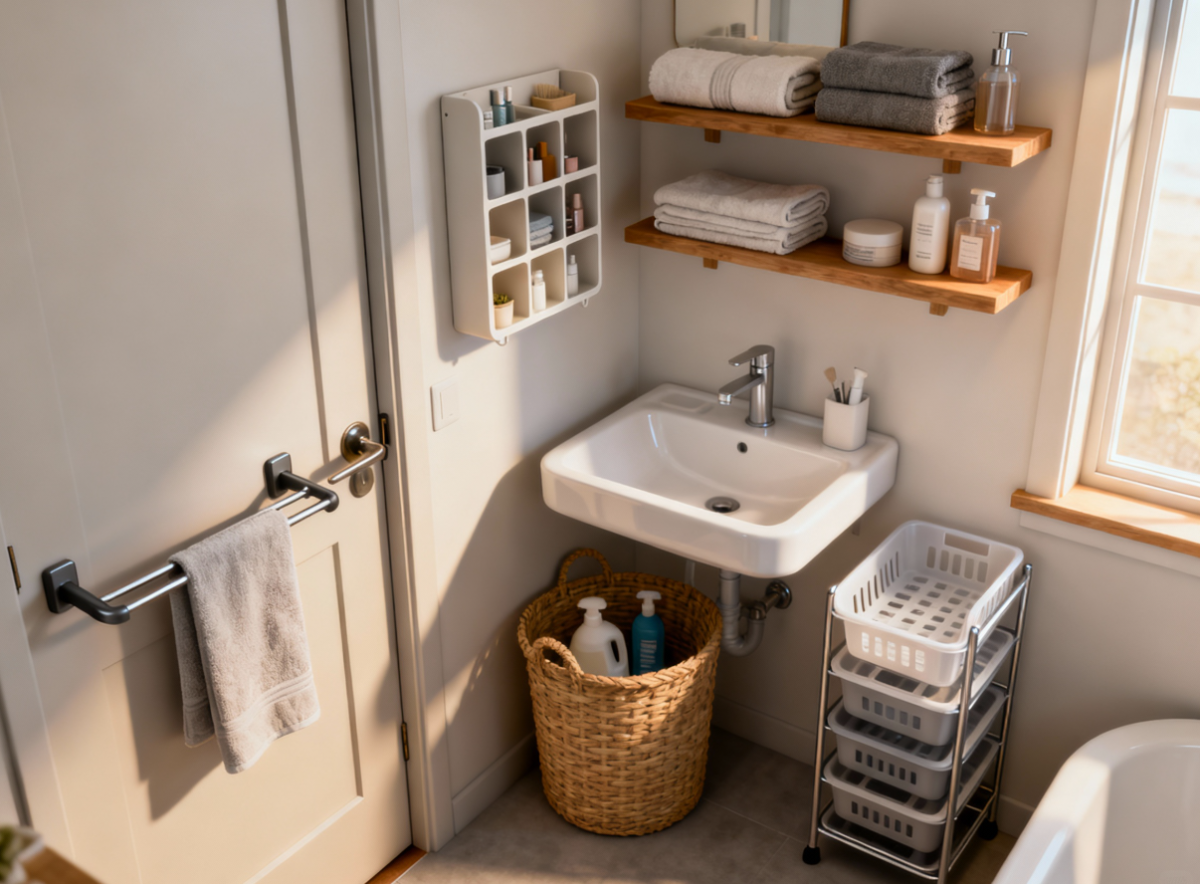
To maximize storage in your small bathroom without major renovations, start by utilizing vertical space with shelves. Invest in over-the-door organizers for easy access to essentials. Opt for multi-functional furniture that serves more than one purpose. Create hidden storage using decorative baskets to keep items out of sight. Use magnetic strips for small tools and hang hooks for towels. Finally, incorporate a rolling cart for flexible storage solutions. Keep exploring to discover even more smart ideas!

Utilize Vertical Space With Shelving

When you’re short on floor space, utilizing vertical storage can transform your small bathroom into a more organized and functional area.

Installing shelves above the toilet or next to the sink maximizes your wall space and keeps essentials within easy reach. Use decorative baskets or bins on these shelves to store toiletries and towels, creating a neat, cohesive look.

You can also consider floating shelves; they offer a modern touch while providing extra storage without occupying floor space.

Don’t forget to arrange items by frequency of use—store daily essentials at eye level and seasonal items higher up.

Invest in Over-the-Door Organizers

Maximizing storage in a small bathroom often means thinking outside the box, or in this case, the door. Over-the-door organizers are a fantastic solution for utilizing unused space.

You can hang them on your bathroom door to store toiletries, cleaning supplies, or even towels. This keeps your essentials within reach while freeing up counter space.

Look for organizers with pockets or shelves to fit your needs. They’re easy to install and come in various styles, so you can find one that matches your decor.

Investing in these organizers can greatly enhance your bathroom’s functionality and organization without costly renovations.

Opt for Multi-Functional Furniture

In small bathrooms, choosing multi-functional furniture can make a significant difference in both storage and style.

Look for pieces that serve dual purposes, like a vanity with built-in storage or a bench that doubles as a laundry hamper. Wall-mounted shelves can provide display space while keeping essentials within reach.

Consider a stool that can be tucked away when not in use—perfect for extra seating or a stepping stool. Opting for modular furniture lets you adapt your space as needed.

With smart choices, you’ll maximize functionality without sacrificing aesthetics, creating an inviting, organized bathroom that meets all your needs.

Create Hidden Storage With Baskets

Baskets can transform your small bathroom into a clutter-free oasis, offering stylish and practical hidden storage solutions. You can place them under the sink, on shelves, or even hang them on hooks to maximize space.

Use decorative baskets to store toiletries, towels, or cleaning supplies, keeping them organized yet out of sight. Consider varying sizes and materials to add texture and interest. Label each basket for easy access, making it simple to find what you need.

With a little creativity, you’ll create a neat and inviting atmosphere, turning your small bathroom into a functional and beautiful space.

Use Magnetic Strips for Small Items

Sometimes, small items in a bathroom can easily get lost or clutter your counter space. A simple solution is to use magnetic strips.

Attach a strip to the wall or inside a cabinet door, and you’ll create instant storage for metal items like tweezers, scissors, or bobby pins. This keeps them visible and accessible while freeing up your surfaces.

You can even paint the strip to match your decor for a seamless look. By using magnetic strips, you’ll maximize your storage without any major renovations, making your small bathroom feel more organized and functional.

Give it a try!

Hang Hooks for Towels and Accessories

Adding hooks for towels and accessories can drastically improve the functionality of your small bathroom. By installing a few hooks on the back of the door or walls, you’ll free up valuable space and keep your towels within easy reach.

Choose decorative hooks that match your bathroom’s style for an added aesthetic touch. You can also hang accessories like robes or loofahs, keeping everything organized and off the floor.

Consider using adhesive hooks for a no-drill solution, perfect for renters. With this simple addition, you’ll create a more efficient and pleasant bathroom experience without the need for major renovations.

Incorporate a Rolling Cart for Flexibility

Consider rolling in a versatile cart to maximize storage in your small bathroom. A rolling cart offers flexibility, allowing you to easily move essentials wherever you need them.

Use it to store extra towels, toiletries, or cleaning supplies, keeping everything organized and within reach. When you need more space, simply roll it into a corner or behind the door.

Choose a cart with multiple shelves or baskets for even better organization. Plus, with various styles available, you can find one that complements your decor.

Embrace this smart solution to enhance functionality without any major renovations!

Frequently Asked Questions

How Can I Maximize Storage Without Sacrificing Style?

You can maximize storage without sacrificing style by using multifunctional furniture, incorporating stylish baskets, and installing floating shelves.

Keep colors and materials cohesive, ensuring everything blends seamlessly while still providing practical storage solutions for your space.

What Are the Best Materials for Bathroom Shelving?

The best materials for bathroom shelving are water-resistant options like bamboo, metal, or treated wood.

These materials combine durability with style, ensuring your shelves can handle humidity while looking great in your space.

How Do I Choose the Right Over-The-Door Organizer?

To choose the right over-the-door organizer, consider your storage needs, door height, and the organizer’s weight capacity.

Make sure it fits your style and complements your bathroom decor for a cohesive look.

Can I Paint or Customize Storage Solutions?

Yes, you can definitely paint or customize storage solutions!

Choose colors or patterns that match your style, and use removable adhesive or paint designed for plastics.

This way, you’ll refresh your space without permanent changes.

What Are Some Budget-Friendly Storage Options?

You can use floating shelves, over-the-toilet organizers, and storage bins for budget-friendly options.

Repurpose old furniture or use baskets to maximize space.

Consider tiered carts for easy access to essentials without breaking the bank.

Conclusion

With these seven clever storage solutions, you can transform your small bathroom into an organized oasis without any major renovations. By utilizing vertical space, investing in smart organizers, and incorporating multi-functional furniture, you’ll maximize every inch. Don’t forget to use hidden storage options and clever accessories like magnetic strips and hooks. A rolling cart adds flexibility for your essentials. Get started today, and enjoy a clutter-free bathroom that feels spacious and inviting!

Categories
Uncategorized

Remodeling vs. Renovation: Understanding the Difference Before You Hire a Contractor

Imagine stepping into a newly transformed space, where every corner reflects your vision. Before you can achieve that, it’s essential to understand the difference between remodeling vs. renovation. Each approach serves a distinct purpose and can greatly impact your project’s outcome. As you consider hiring a contractor, knowing which option aligns with your goals can save you time and money. So, how do you determine the right path for your home?

Defining Remodeling and Renovation

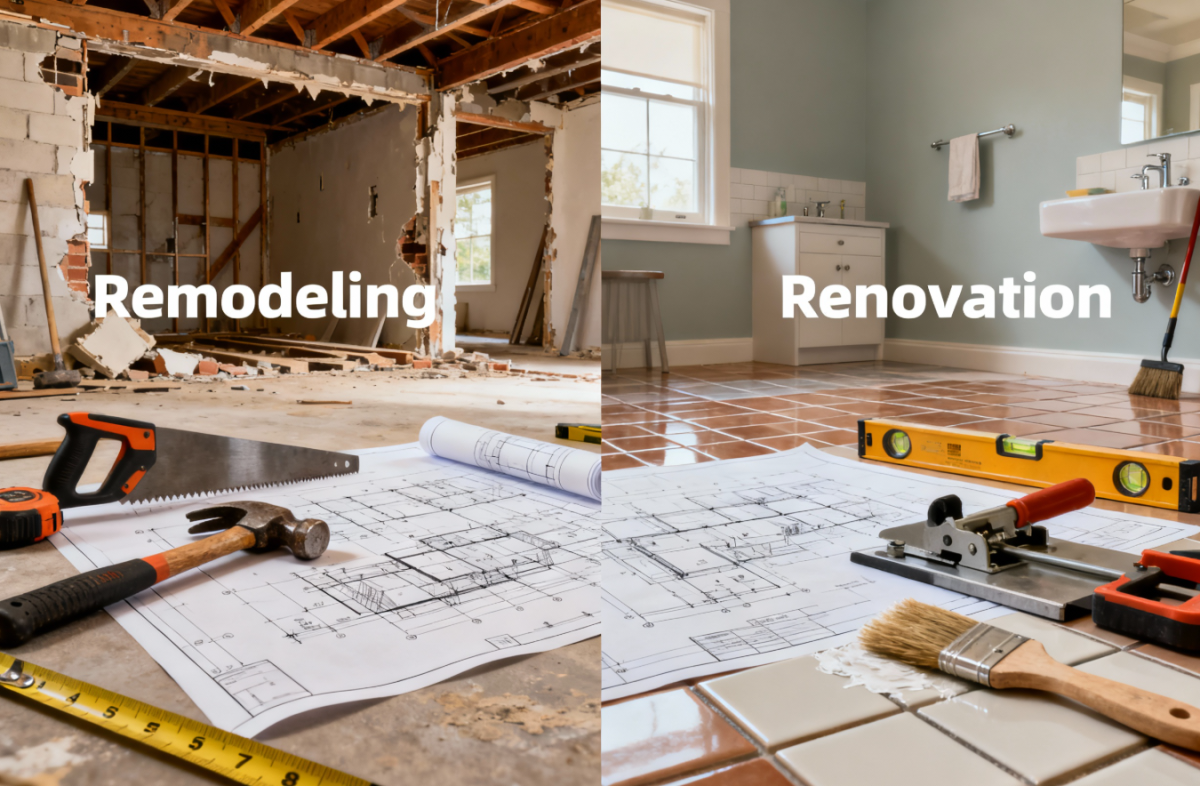
When you think about home improvements, it’s easy to confuse remodeling with renovation, but they actually signify different processes.

Remodeling involves changing the structure or layout of a space, which can dramatically transform your home. You might embrace popular remodeling trends, like open-concept living spaces or modern kitchen islands, to create a more inviting atmosphere.

On the other hand, renovation focuses on restoring or updating existing features without altering the layout, often reflecting various renovation styles, such as historic preservation or modern upgrades.

By understanding these distinctions, you can better express your vision to contractors, ensuring your home embodies the warmth and comfort you desire.

Ultimately, knowing the difference helps you create a space that truly feels like home.

Key Differences Between Remodeling and Renovation

Understanding the key differences between remodeling and renovation can save you time and money on your home improvement projects.

Remodeling typically involves changing the structure or layout of a space to meet your design intentions, like converting a basement into a functional living area. This can greatly alter project outcomes, enhancing both aesthetics and functionality.

On the other hand, renovation focuses on restoring or improving existing features without altering the overall structure, such as updating a kitchen with new cabinets and countertops.

Knowing these distinctions helps you clarify your goals, ensuring you hire the right contractor for the job.

Whether you’re looking to reimagine a space or simply refresh it, understanding these differences is crucial for achieving your vision.

When to Choose Remodeling

Have you ever felt that your home doesn’t quite fit your lifestyle? If so, it might be time to contemplate remodeling.

This approach allows you to make creative design choices that reflect your personality and meet your needs. Whether you want to create an open-concept living space or add a functional home office, remodeling can transform your environment into a place where you feel truly at home.

It’s perfect for those seeking functional upgrades that enhance both comfort and efficiency. By reimagining your space, you can improve how you live and entertain.

When to Choose Renovation

While many homeowners seek to personalize their spaces through remodeling, renovation offers a different approach that can be equally rewarding.

If you’re looking to improve your home’s functionalityenhance its value, or simply bring it up to date without altering its core structure, renovation is the way to go.

There are various renovation types, from kitchen upgrades to bathroom enhancements, each providing specific benefits.

For instance, modernizing your kitchen can boost energy efficiency and create a more inviting atmosphere for family gatherings.

By choosing renovation, you’re not just improving your space; you’re investing in your home’s future.

Cost Considerations for Remodeling vs. Renovation

When weighing the financial aspects of remodeling versus renovation, it’s essential to contemplate both the immediate costs and long-term value. Start with a thorough budget analysis to determine what you can afford.

Remodeling typically involves a higher cost breakdown due to structural changes, while renovation often focuses on cosmetic improvements, making it more budget-friendly.

Consider hidden expenses for both options, such as permits or unexpected repairs. Prioritize your needs and desires to guarantee you’re making a wise investment.

Impact on Home Value

The impact on home value is an essential factor to evaluate when deciding between remodeling and renovation.

Remodeling often enhances aesthetic appeal and functionality, which can lead to a favorable home appraisal. Upgraded kitchens or bathrooms typically attract buyers, reflecting positively on your investment.

On the other hand, renovation focuses on restoring or maintaining a property’s original features, which may not greatly boost value but can preserve it in line with market trends.

Understanding these trends is important; a well-planned remodel might yield a higher return, while thoughtful renovations can help maintain your home’s character.

Ultimately, aligning your choice with current market trends will help guarantee you maximize your home’s value, creating a space that’s both inviting and financially sound.

The Role of a Contractor in Your Project

When you’re ready to start your remodeling or renovation project, finding the right contractor can make all the difference.

Effective communication and collaboration with them will guarantee your vision comes to life while managing timelines keeps everything on track.

Let’s explore how choosing a skilled contractor can enhance your project experience.

Finding the Right Contractor

How do you choose the right contractor for your remodeling or renovation project? Start by evaluating contractor qualifications.

Look for licensed and insured professionals who’ve experience in projects similar to yours. Check their references and read reviews to gauge their reputation.

It’s essential to discuss project timelines upfront; a reliable contractor should provide a clear schedule and stick to it. Ask about their approach to managing any unforeseen issues that may arise.

Don’t hesitate to interview multiple contractors to compare their expertise and communication styles. Finding a contractor who aligns with your vision and values can make all the difference.

You deserve someone who understands your needs and can bring your project to life efficiently and effectively.

Communication and Collaboration

Effective communication and collaboration are essential to the success of your remodeling or renovation project, as they directly influence how smoothly everything runs.

When you and your contractor engage using effective collaboration techniques, you’ll create a teamwork atmosphere that fosters trust and shared goals. Discuss your vision openly, and don’t hesitate to express your concerns.

Different communication styles can impact your project, so find a rhythm that works for both of you. Whether it’s regular check-ins or detailed progress updates, maintaining this dialogue helps you stay on the same page.

Managing Project Timelines

While maneuvering the complexities of a remodeling or renovation project, managing timelines becomes essential, and your contractor plays a pivotal role in this process. They’re your go-to person for effective timeline management, guaranteeing that every phase of your project aligns with your expectations.

By establishing clear project scheduling, your contractor can anticipate potential delays and proactively address them, keeping your project on track. Regular updates and open communication help you stay informed and involved, fostering a sense of belonging in the process.

With an experienced contractor guiding you, you can navigate timelines confidently, making your vision a reality while minimizing stress. Remember, a well-managed timeline not only enhances efficiency but also guarantees a smoother, more enjoyable renovation experience.

Planning Your Project Scope

As you commence on your remodeling or renovation journey, defining your project scope is essential for a successful outcome. Start by outlining your project objectives—what do you want to achieve? Whether it’s creating a more functional space or enhancing aesthetics, clarity here will guide your decisions.

Next, factor in your budget constraints. Knowing how much you can invest helps prioritize features and materials while avoiding costly surprises.

Collaborate with your contractor to guarantee your vision aligns with practical possibilities. This collaboration fosters a sense of belonging, as you’re both working towards a common goal.

Common Misconceptions

Many people confuse remodeling and renovation, assuming they’re interchangeable terms. This misunderstanding leads to myths debunked, making it essential for you to grasp the terminology clarity.

Remodeling involves altering the structure or function of a space, like changing a kitchen layout or adding a room. In contrast, renovation focuses on restoring or improving an existing structure without changing its purpose, such as repainting or replacing fixtures.

By recognizing these distinctions, you’ll not only communicate better with contractors but also make more informed decisions for your project. Understanding the difference fosters confidence and guarantees you’re on the same page, creating a sense of belonging in your home transformation journey.

Don’t let misconceptions hold you back!

Tips for Effective Communication With Your Contractor

Effective communication with your contractor is essential for a successful project.

Start by clearly defining your expectations, using visual aids to illustrate your vision, and establishing regular check-ins to keep everything on track.

This approach not only minimizes misunderstandings but also fosters a collaborative environment.

Clearly Define Expectations

How can you guarantee your vision for the remodeling or renovation project aligns with your contractor’s understanding? Start by clearly defining your expectations.

Outline your project goals, detailing what you envision for the space. Share any specific design elements or functionalities you want to include. This clarity helps foster expectation alignment between you and your contractor, ensuring everyone’s on the same page.

Regularly check in with your contractor to discuss progress and address any concerns. This open line of communication creates a sense of belonging, making you feel more involved in the process.

Use Visual Aids

What’s the best way to guarantee your contractor truly understands your vision? Using visual aids is key. A visual representation of your ideas can bridge any communication gaps.

Consider creating mood boardssketches, or even digital designs to clarify your expectations. Infographic examples can help convey complex concepts in a simple, digestible format, making it easier for your contractor to grasp your style and preferences.

Don’t underestimate the power of visuals; they foster a shared understanding and can prevent misunderstandings down the line. When you present your ideas visually, you invite your contractor into your creative process, fostering a sense of collaboration and belonging that’s essential for a successful project.

Establish Regular Check-ins

To guarantee your project stays on track and meets your expectations, establishing regular check-ins with your contractor is crucial. Schedule consistent meetings—whether weekly or bi-weekly—to discuss project updates and address any concerns.

This not only fosters open communication but also builds trust, making you feel more connected to the process. During these check-ins, ask about contractor availability to confirm they’re aligned with your timeline and any upcoming deadlines.

Make certain you’re clear about your goals and any changes you wish to implement. By actively participating in these discussions, you’ll feel more engaged and informed, helping create a collaborative environment that contributes to the success of your remodeling or renovation project.

Real-Life Examples of Remodeling and Renovation Projects

Many homeowners find themselves contemplating the difference between remodeling and renovation when starting on a home improvement project.

For instance, a kitchen expansion that opens up space and creates a more functional layout is a perfect example of remodeling. You’re not just updating; you’re reimagining the entire area to fit your lifestyle better.

On the other hand, a bathroom upgrade, where you replace fixtures and update tiles without changing the layout, falls under renovation. It’s about revitalizing what you already have.

Understanding these distinctions helps you make informed decisions, ensuring your project aligns with your vision and needs.

Whether you’re expanding or upgrading, knowing the difference can lead to a successful home transformation.

Categories
Uncategorized

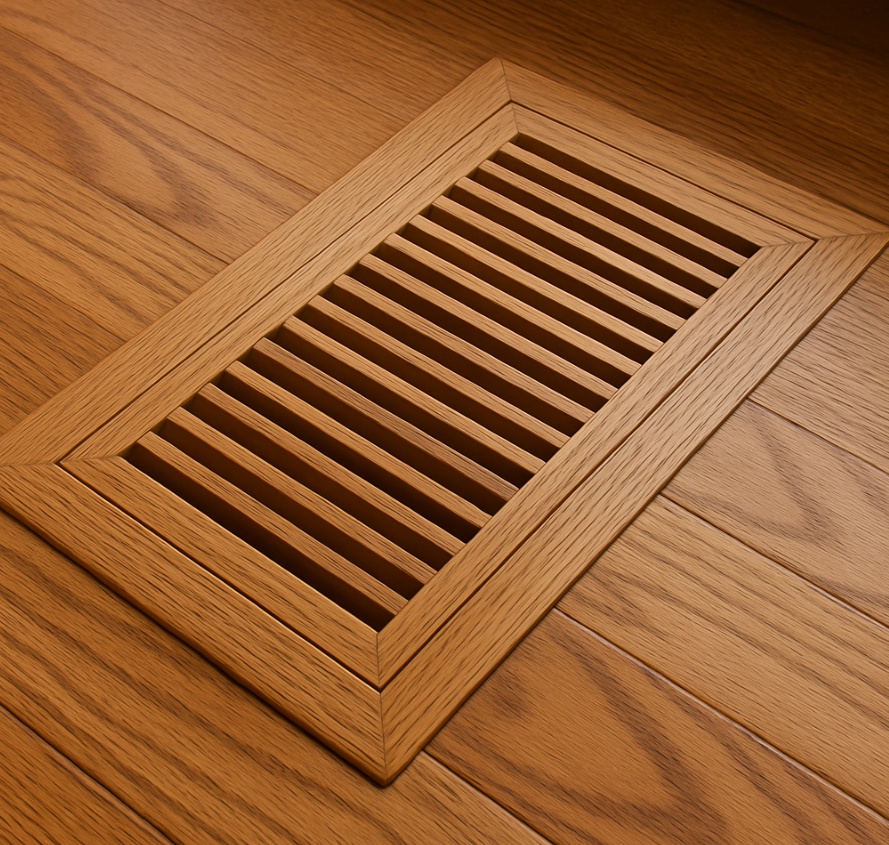
The Benefits of Installing Wood Floor Grates

Many homeowners overlook the advantages of installing wood floor grates, yet they can significantly enhance your living space. These grates provide effective ventilation, helping to regulate temperature and moisture control in your home. Additionally, wood floor grates seamlessly blend with your decor, adding a touch of elegance while improving air circulation. By investing in quality wood grates, you can also prolong the lifespan of your flooring, ensuring a comfortable environment year-round.

Benefits of Wood Floor Grates

By installing wood floor grates, you unlock numerous advantages that enhance both functionality and style in your home. These grates facilitate better airflow and improve heating efficiency, ensuring a cozy environment, especially during colder months. Furthermore, they add a unique design touch, blending seamlessly with various interior styles, making it an investment that pays dividends in comfort and aesthetics.

Improved Air Circulation

Wood floor grates enhance air circulation by allowing heated or cooled air to flow freely through your living spaces. This improved airflow results in a more consistent temperature throughout your home, minimizing hot or cold spots. In homes with central heating and cooling systems, these grates ensure that air reaches all corners effectively, leading to energy efficiency and comfort.

Enhanced Aesthetic Appeal

The aesthetics of your space can be significantly elevated with the addition of wood floor grates. They provide a warm, inviting look that complements hardwood floors, allowing for a cohesive design. Available in various styles and wood types, you can choose grates that match your interior decor, adding texture and character to rooms. Their elegant design can turn a functional feature into a visually appealing element.

Choosing the right wood floor grate not only harmonizes with your flooring but also serves as a design focal point. For instance, intricate patterns or custom finishes can enhance traditional spaces, while sleek, minimalist grates can suit modern designs. High-quality wood grates not only boost visibility but also reflect your personal style, making each room feel more intentional and curated. You improve your home’s design without sacrificing practicality, creating a stunning balance between form and function.

Durability and Longevity

Wood floor grates provide exceptional durability and longevity, making them a wise investment for your home. Unlike other materials, quality wood can withstand heavy foot traffic and resist wear over time. When properly installed and cared for, these grates have an impressive lifespan, retaining their aesthetic appeal and functionality for decades.

Material Quality

Choosing high-quality wood species, such as oak or maple, greatly impacts the longevity of your floor grates. These hardwoods are naturally resistant to dents and scratches, ensuring they maintain their beauty even in high-traffic areas. Solid construction coupled with premium finishes helps to enhance durability, making them a reliable choice for your flooring needs.

Maintenance Requirements

Your wood floor grates do require some maintenance to keep them looking their best. Regular cleaning, such as sweeping or vacuuming, removes dirt and debris that can cause scratches. Additionally, applying a protective finish every few years will preserve the wood’s integrity and luster, while ensuring longevity.

Proper maintenance involves not only routine cleaning but also scheduled inspections for signs of wear or damage. Addressing minor issues, like tightening loose boards or reapplying finish, can prevent larger problems down the line. Consider using a gentle cleaner specifically designed for wood, and avoid excessive moisture to maintain the quality of your floor grates. This proactive approach ensures they remain a beautiful feature in your space for many years.

Environmental Considerations

When considering your home’s impact on the environment, wood floor grates offer several advantages that align with eco-conscious practices. Sourced from renewable forests, they help reduce the carbon footprint associated with flooring materials. Plus, sustainable management practices ensure that your choice supports biodiversity and forest health, making it a responsible option for environmentally aware homeowners.

Sustainability of Wood

Opting for wood grates means choosing a sustainable material that, when responsibly sourced, contributes positively to the environment. Wood is biodegradable and can be sustainably harvested, making it a preferable choice compared to synthetic flooring options. By selecting wood grates certified by organizations like the Forest Stewardship Council (FSC), you can ensure that your choice reflects environmentally sound practices.

Energy Efficiency

Your home’s energy efficiency can significantly benefit from installing wood floor grates. They facilitate better air circulation compared to other materials, helping to regulate indoor temperature and reduce energy usage for heating and cooling. Improved airflow can lead to lower utility bills, making wood grates a smart choice for both comfort and cost savings.

By enhancing air circulation, wood floor grates assist in minimizing the reliance on heating and cooling systems. This improvement can lead to energy savings of up to 20% annually, depending on your home’s layout and existing systems. Additionally, maintaining a consistent indoor temperature reduces wear on HVAC systems, extending their lifespan and further decreasing energy costs. The integration of wood grates not only contributes to a more comfortable living environment but also represents a sustainable approach to home design that prioritizes efficiency and environmental health.

Installation Process

Installing wood floor grates involves careful planning and precise execution to ensure optimal airflow and aesthetics. Begin by assessing the areas where you intend to install the grates, ensuring compatibility with your existing flooring. Proper installation not only enhances functionality but also contributes to the overall appearance of your space.

Tools and Materials Needed

You’ll need specific tools and materials to facilitate a smooth installation. Gather necessary items such as a measuring tape, utility knife, wood glue, wood floor grates, and finish nails. Having the right tools on hand saves time and helps achieve a professional result.

Step-by-Step Guide

The installation of wood floor grates can be broken down into several clear steps that will help you achieve a seamless finish. Begin by measuring the space where you will install the grate, cut the opening as required, and ensure a snug fit. Next, secure the grate with wood glue and finish nails.

Step-by-Step Guide

Step Description
1. Measure Accurately measure the area for the grate installation.
2. Cut Opening Carefully cut the opening in the flooring to fit the grate.
3. Fit Grate Place the wood floor grate in the cut-out area to ensure a snug fit.
4. Secure Use wood glue and finish nails to fasten the grate in place.

Each step in the process requires attention to detail for success. After cutting the flooring, it’s important to sand the edges for a smooth finish. When securing the grate, ensure it sits level with the surrounding floor to avoid tripping hazards. Lastly, cleanup any excess glue for a polished appearance and consistent airflow throughout your space.

Additional Step-by-Step Guidelines

Step Note
5. Finish Edges Smooth any rough edges with sandpaper for safety and aesthetics.
6. Final Check Inspect the installation to ensure stability and a seamless fit.

Cost Considerations

Initial Investment

When evaluating wood floor grates, consider the initial investment, which can vary based on material quality and design complexity. High-quality wood options may range from $15 to $40 per square foot, affecting your budget significantly. It’s wise to factor in installation costs, as professional installation can add an additional $5 to $15 per square foot. Careful planning of your project can help you allocate funds effectively.

Long-Term Value

Investing in wood floor grates offers substantial long-term value. Not only do they enhance the aesthetic appeal of your space, but their durability also contributes to increasing your property’s overall value. Homebuyers often prefer features that improve air circulation and contribute to efficient heating and cooling. This means you can see a solid return on your investment when it’s time to sell.

Additionally, wood floor grates can improve the efficiency of your HVAC system by promoting better airflow, which may lead to reduced energy bills over time. On average, homeowners experience a 10-20% decrease in utility costs with effective ventilation solutions like these. By selecting wood floor grates, you’re not just opting for enhanced visual appeal; you’re making a choice that pays off in both comfort and savings in the years to come.

Common Misconceptions

Misconceptions surrounding wood floor grates can deter many from considering them for their spaces. Often, people believe that these grates are too fragile, aesthetically unpleasing, or unsuitable for modern homes. However, these assumptions fail to recognize the advancements in design and durability that make wood floor grates a valuable addition to any environment.

Myths About Wood Floor Grates

You might think wood floor grates are noisy or prone to wear and tear, creating an inconvenient experience. However, many modern designs incorporate noise-dampening features and are crafted from high-quality materials designed for longevity. This challenges the stereotype that they won’t stand the test of time.

Clarifying Misunderstandings

Another common misunderstanding is that wood floor grates require excessive maintenance. In reality, they often need the same care as your regular flooring. A simple cleaning routine and occasional refinishing can keep them looking and functioning beautifully over time, proving to be more practical than many assume.

To clarify further, the maintenance of wood floor grates is often comparable to caring for hardwood flooring, which typically involves sweeping, vacuuming, and periodic polishing. Many wood floor grates are finished with protective coatings that enhance their durability and resistance to moisture. This means that regular upkeep can be minimal, allowing you to enjoy the aesthetic benefits without the burden of excessive maintenance. With a smart choice of wood and finishes, these grates can endure heavy foot traffic just like any other flooring option, making them a viable choice for both residential and commercial settings.

Final Words

Considering all points, installing wood floor grates can significantly enhance your home’s aesthetic while improving air circulation and reducing energy costs. You benefit from increased durability and style, as these grates blend seamlessly with various interior designs. Their ability to mask unsightly vent openings creates a polished look in your space, ensuring that you enjoy both functionality and beauty. Investing in wood floor grates not only elevates your home’s appearance but also contributes to a more comfortable living environment, making it a worthwhile addition for any homeowner.

Categories
Uncategorized

Simple Door Hardware Upgrade: How to Replace a Doorknob in 5 Steps

An old, sticky, or brassy doorknob can instantly date a room and even make accessing a space frustrating. Fortunately, learning How to Replace a Doorknob is one of the easiest, fastest, and most satisfying DIY projects you can complete. Whether you are swapping a basic passage handle for a privacy lock or simply refreshing outdated hardware for a modern look, this task requires nothing more than a few basic tools and about 15 minutes of your time. If you can handle a screwdriver, you can tackle this project. Follow our simple, step-by-step instructions to achieve a beautiful, functional update today!

Upgrading your doorknob can dramatically improve your space’s look and feel without breaking the bank. This simple DIY project requires just a few tools and a bit of your time. By following five straightforward steps, you can achieve a polished and functional result that elevates your home’s entrance. Ready to tackle this easy upgrade? Let’s explore how to get started.

Gather Your Tools and Materials

Before you plunge into replacing your doorknob, it’s essential to gather the right tools and materials.

Start with your tool selection: you’ll need a screwdriver, a new doorknob, and possibly a drill. A flathead and Phillips screwdriver will cover most types of doorknobs.

Next, consider material types. Choose a doorknob that matches your style, whether it’s brass, stainless steel, or a more modern finish. If you’re looking for durability, opt for metal over plastic.

Having the right tools and materials won’t only streamline the process but also guarantee your new doorknob enhances the look and feel of your space.

With everything ready, you’ll feel confident in your ability to complete this upgrade successfully.

Remove the Old Doorknob

With your tools and materials at the ready, it’s time to remove the old doorknob.

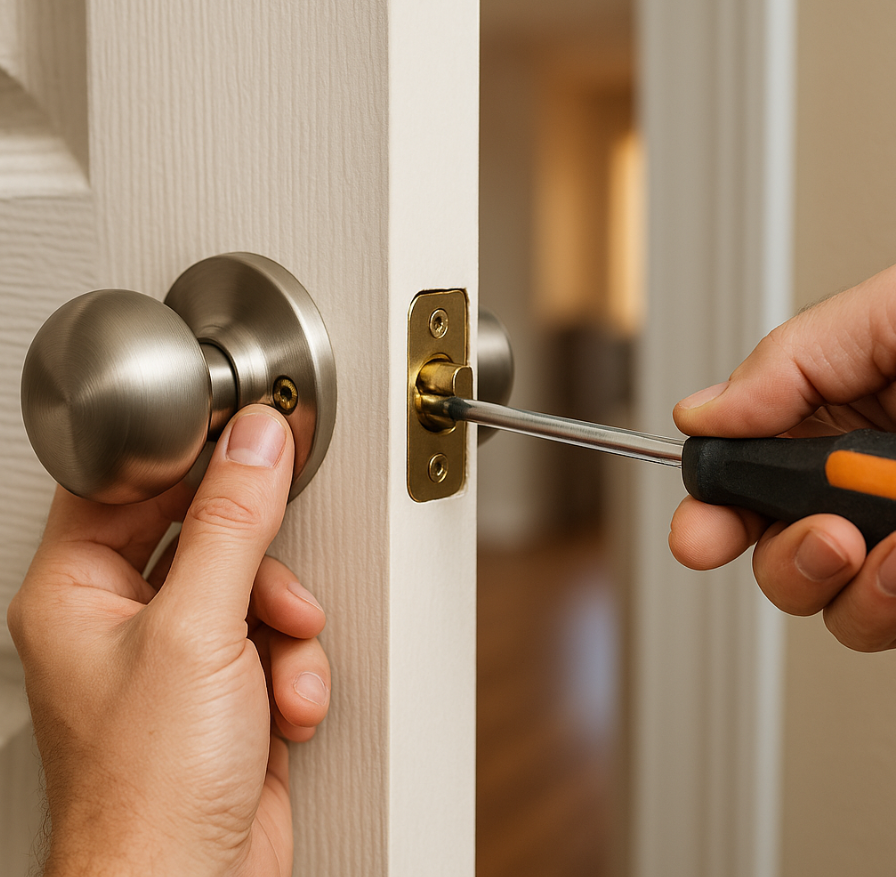
Start by identifying the knob type—either a passage, privacy, or dummy knob. Most have visible screws on the side or back. Use a screwdriver to unscrew these, employing appropriate removal techniques.

If you can’t see screws, look for a small pinhole; this often hides a release mechanism. Insert a paperclip or similar tool to push the pin and release the knob.

Once you’ve removed the knob, take off the faceplate and latch mechanism by unscrewing them as well. This step is essential for a smooth installation of your new doorknob, ensuring everything aligns perfectly for your door.

Install the New Doorknob

Now it’s time to install your new doorknob. First, align the doorknob components with the holes in the door. Depending on the doorknob styles you’ve chosen, you may need specific installation techniques.

Insert the spindle through the latch and attach the exterior knob, ensuring it fits snugly. Next, secure the interior knob, aligning it with the spindle and tightening any screws. Be careful not to overtighten, as this can damage the doorknob.

If your knob has a locking mechanism, make sure it’s positioned correctly. Finally, check that everything feels secure and functions smoothly.

With your new doorknob in place, you’ll enjoy a refreshed look that enhances your home’s style and functionality.

Test the Functionality

After securing your new doorknob, it’s time to test the functionality to confirm everything works as it should.

Start by turning the doorknob to guarantee it rotates smoothly without any resistance. Next, check the doorknob alignment by closing the door and observing if it latches correctly. If it doesn’t catch, you might need to adjust the strike plate or the doorknob itself.

Give the knob a gentle push to see if it locks and releases easily. Pay attention to any unusual sounds; these could indicate misalignment.

Finally, verify the door opens and closes without sticking. Effective functionality testing will help you enjoy your upgraded doorknob, making your space feel more welcoming and secure.

Final Touches and Cleanup

Once you’ve confirmed your new doorknob functions properly, it’s time to focus on the final touches and cleanup.

Start with a final inspection to guarantee everything is secure; check screws and alignment one last time.

If you’ve got any decorative accents, like a matching plate or trim, now’s the moment to install those for a polished look.

Wipe down the area around the doorknob to remove fingerprints or dust, guaranteeing it looks as good as it works.

Don’t forget to dispose of any packaging and old hardware responsibly.

With these steps, you’ll not only enjoy a functional door but also create an inviting atmosphere that reflects your personal style and care for your space.

Categories
Uncategorized

5 DIY Projects That Add the Most Resale Value to Your Home


We’ve zeroed in on the 5 DIY Projects That Add the Most Resale Value to Your Home, concentrating on simple, achievable tasks that appeal directly to modern buyers. From enhancing curb appeal to updating kitchens, these projects prove you don’t need a contractor to make a significant financial impact on your property’s worth.

Not all home improvements are created equal—especially when it comes to selling your property. If you’re looking to boost your asking price without breaking the bank on a professional renovation, you need to focus on key areas that offer the highest return on investment (ROI).

If you want to boost your home’s resale value, start with landscaping to enhance curb appeal. Upgrade your kitchen with modern fixtures, and paint the bathroom for a fresh look. Create an inviting outdoor space by adding comfortable seating and greenery. Finally, installing energy-efficient features can greatly lower utility costs and attract buyers. Follow these tips, and you’ll see how simple changes can make a big impact on your home’s value. There’s much more to explore!

Revamp Your Curb Appeal With Landscaping

When you want to boost your home’s resale value, revamping your curb appeal with landscaping is a smart move.

Start by trimming overgrown bushes and trees to create a clean, inviting look. Add colorful flowers or low-maintenance plants to enhance visual interest. Consider installing a fresh layer of mulch for a polished finish.

Don’t forget about your lawn—regular mowing and fertilizing can make a huge difference. You might even create defined garden beds or pathways to guide visitors.

Upgrade Your Kitchen With New Fixtures

Upgrading your kitchen with new fixtures can dramatically enhance both its functionality and aesthetic appeal.

Start with modern faucets that not only look great but also improve water efficiency. Consider adding stylish cabinet hardware to refresh your cabinets without a full remodel.

Pendant lights over the island can create a focal point and improve lighting. Don’t forget about your sink; a deep, stainless-steel model adds both utility and style.

Finally, choose a backsplash that complements your new fixtures, tying the whole look together. These small updates can greatly boost your home’s resale value while making your kitchen a more pleasant space.

Enhance Your Bathroom With a Fresh Coat of Paint

After enhancing your kitchen with modern fixtures, it’s time to turn your attention to the bathroom.

fresh coat of paint can make a significant difference without breaking the bank. Choose light, neutral colors to create a spacious feel or soft pastels for a calming atmosphere.

Don’t forget to prep the surfaces by cleaning and priming them for better adhesion. Use mold-resistant paint for durability, especially in humid environments.

This simple update not only revitalizes the space but also appeals to potential buyers, making your home more attractive and increasing its resale value.

Grab your brush and get started!

Create an Inviting Outdoor Space

While you may focus on the interior of your home, don’t overlook the potential of your outdoor space to boost resale value.

Start by adding comfortable seating, like a patio set or a hammock, to create a cozy atmosphere. Incorporate greenery with potted plants or a small garden, enhancing visual appeal.

Consider installing a fire pit for evening gatherings, making it inviting year-round. A well-defined pathway leading to your outdoor area can also improve functionality.

With minimal investment, you can transform your backyard into an appealing oasis, making it a standout feature for potential buyers.

Install Energy-Efficient Features

As you look to enhance your home’s value, installing energy-efficient features can be a game-changer.

Begin with upgrading to Energy Star-rated appliances, which not only save energy but also appeal to eco-conscious buyers. Consider adding programmable thermostats, which help regulate heating and cooling costs.

Replacing old windows with double or triple-pane glass can greatly improve insulation. Don’t forget about solar panels; they can drastically reduce electricity bills and attract buyers looking for sustainability.

Finally, enhancing insulation in your attic or walls can make your home more comfortable and energy-efficient. These updates can lead to a higher resale value in today’s market.

Frequently Asked Questions

Which DIY Projects Are Most Cost-Effective for Resale Value?

You’ll find that updating kitchens and bathrooms, adding curb appeal with landscaping, and freshening up paint are some of the most cost-effective DIY projects.

They greatly boost your home’s appeal and resale value without breaking the bank.

How Much Value Does a New Roof Add to My Home?

A new roof can add significant value to your home, often recouping about 60-70% of its cost.

Besides, it enhances curb appeal and attracts buyers, making it a smart investment for resale purposes.

Are There Any DIY Projects to Avoid for Resale?

You should avoid overly personalized renovations, like unique wallpaper or extravagant landscaping.

These can deter potential buyers.

Instead, focus on neutral updates that appeal to a wider audience, ensuring your home remains market-friendly.

What Is the Average ROI for Kitchen Renovations?

The average ROI for kitchen renovations hovers around 60-80%.

You’ll see better returns by focusing on modern updates and practical layouts.

Just remember, quality materials and craftsmanship can greatly boost your investment’s value.

Can DIY Projects Actually Decrease My Home’s Value?

Yes, DIY projects can decrease your home’s value if they’re poorly executed or don’t align with neighborhood standards.

Buyers might view shoddy work as a red flag, leading to lower offers or longer sell times.

Conclusion

Mastering these 5 DIY Projects That Add the Most Resale Value to Your Home gives you a major advantage in a competitive market. By focusing your limited time and budget on high-impact areas like curb appeal, updated kitchens, minor bathroom facelifts, and smart, energy-efficient fixes, you appeal to buyers’ desire for move-in readiness and low future costs. Remember, buyers often pay a premium for properties they perceive as requiring zero immediate work. Choose one of these projects this weekend, and start building equity and appeal today!

By tackling these DIY projects, you can significantly boost your home’s resale value. Revamping your curb appealupgrading your kitchen, refreshing your bathroom, creating a welcoming outdoor space, and adding energy-efficient features are all great ways to make a lasting impression on potential buyers. Not only will these improvements enhance your living experience, but they’ll also pay off when it’s time to sell. So, grab your tools and get started on these rewarding upgrades today!

Categories
Uncategorized

Solar Panels Pros And Cons

Making the decision to install a solar energy system on your home is a major financial and environmental choice. Before you sign a contract, it’s essential to thoroughly analyze the Solar Panels Pros And Cons to determine if the investment makes sense for your specific property and energy consumption habits. While the benefits—like eliminating electric bills and utilizing substantial government tax credits—are highly attractive, the initial investment, roof requirements, and system upkeep must also be carefully considered. We break down the advantages and disadvantages to give you a clear, balanced picture of solar ownership.

Solar panels come with a mix of pros and cons. You can save on electricity bills and reduce your carbon footprint, making them an eco-friendly investment. Government incentives help with initial costs, too. However, you’ll face significant upfront expenses, and energy production can be weather dependent. Space for installation might also be a challenge. Understanding these factors can help you make an informed choice about solar energy. There’s more to reflect upon, so keep exploring!

Benefits of Solar Panels

When you consider switching to solar panels, you’ll discover several compelling benefits that can enhance your lifestyle and reduce your environmental impact.

Recent solar technology advancements have greatly improved solar panel efficiency, allowing you to generate more energy from sunlight. This means you’ll rely less on traditional energy sources, making your home more sustainable.

Additionally, solar energy storage solutions enable you to store excess energy for use during peak demand, ensuring you always have power when you need it.

You might also find government solar programs that offer incentives, making the change easier and more attractive.

Keeping an eye on solar energy trends will help you stay informed about innovations that can further enrich your solar experience and lifestyle.

Cost Savings and Financial Incentives

Not only do solar panels provide significant long-term cost savings, but they also come with various financial incentives that can make the shift to renewable energy even more appealing.

By installing solar panels, you can enjoy substantial financial returns over time, as reduced electricity bills add up. Many homeowners benefit from government rebates and tax credits, which can offset the initial investment costs.

An investment analysis often shows that solar energy systems can pay for themselves in just a few years, leading to impressive long-term savings. Plus, as energy prices rise, your savings will grow, making solar panels not only an eco-friendly choice but also a smart financial decision.

Embrace the benefits and start saving today!

Environmental Impact

Installing solar panels not only boosts your financial savings but also greatly benefits the environment. By harnessing renewable energy sources, you’re contributing to significant carbon footprint reduction, which helps combat climate change.

Solar panels generate electricity without emitting harmful greenhouse gases, making them an eco-friendly choice. Technological advancements have improved their efficiency, allowing for better energy capture and reduced waste.

Additionally, integrating solar energy into your home can positively influence local ecosystems. While it’s essential to evaluate the materials used in solar panel production, the long-term benefits often outweigh these concerns.

Energy Independence

By opting for solar panels, you can achieve a greater degree of energy independence while reducing reliance on traditional power sources. This change enhances your energy security, as you tap into renewable resources that are abundant and sustainable.

With solar energy, you can work towards grid independence, minimizing your vulnerability to fluctuating energy prices and supply disruptions. Incorporating energy storage solutions, like batteries, allows you to store excess energy for later use, further increasing your autonomy.

Additionally, understanding the policy implications surrounding solar energy can help you navigate incentives and regulations that support your shift.

Ultimately, investing in solar panels not only empowers you but also contributes to a more resilient energy future.

Installation and Maintenance Considerations

While choosing to install solar panels can be a rewarding decision, it’s vital to evaluate the complexities of installation and ongoing maintenance.

The installation process involves evaluating your roof compatibility to guarantee it can support the panels. Hiring qualified technicians is essential, as their expertise can affect system performance and longevity.

Once installed, maintenance frequency typically ranges from annual checks to occasional cleaning, depending on your environment. You’ll also want to implement system monitoring to track performance and detect issues early.

Aesthetic and Property Value Effects

When considering solar panels, the impact on your home’s aesthetics and property value is essential. You’ll want to evaluate how they fit into your home design and enhance curb appeal.

Some homeowners find that solar panels can be a stylish addition, blending well with modern architecture. However, in neighborhoods where traditional aesthetics prevail, they might stand out negatively.

Proper landscaping integration can help mitigate this issue, creating a cohesive look. Plus, many buyers appreciate energy-efficient features, which can positively influence property resale value.

Ultimately, balancing your personal taste with neighborhood aesthetics can lead to a wise investment that enhances both the beauty and value of your home.

Limitations and Drawbacks of Solar Energy

Although solar energy offers numerous benefits, it also comes with several limitations and drawbacks that homeowners should consider.

One major issue is the initial investment; the cost of solar panels and installation can be significant. You’ll also need adequate space for the panels, which may not be feasible for everyone.

Additionally, solar energy relies heavily on weather conditions, making it less effective on cloudy or rainy days. This weather dependency can lead to inconsistent energy production, requiring efficient energy storage solutions to guarantee reliability.

Finally, recycling concerns regarding solar panels can pose environmental challenges at the end of their lifecycle.

Weighing these limitations against the benefits is essential for making an informed decision about solar energy for your home.

Frequently Asked Questions

How Long Do Solar Panels Typically Last Before Needing Replacement?

Imagine sunlight transforming into energy; solar panels typically last 25-30 years. Over time, efficiency degradation occurs, so consider warranty coverage and potential replacement costs. Regular maintenance guarantees your investment shines bright for years to come.

Can Solar Panels Work in Cloudy or Rainy Weather?

Yes, solar panels can work in cloudy or rainy weather. While their solar efficiency decreases, they still produce energy on cloudy days and in rainy conditions, ensuring you get some energy production regardless of the weather impact.

What Happens to Solar Panels During Severe Weather Events?

During severe weather, solar panels show impressive storm resilience. They’re designed to withstand winds up to 140 mph, resist hail damage, and handle snow accumulation, but flood risks can still affect their performance and maintenance.

Are There Solar Panel Options for Renters or Non-Homeowners?

Yes, as a renter, you can explore solar leases, community solar projects, and solar power purchase agreements. Additionally, consider portable solar options if rooftop installations aren’t feasible for your living situation.

How Do Solar Panels Affect Home Insurance Policies?

Installing solar panels can enhance your home’s value, but it may also affect your home insurance. You’ll need to discuss coverage limits, premium adjustments, and installation disclosures to address any liability concerns with your insurer.